


Best Cursive Handwriting Workbook for Kids: A Guide
Choosing a cursive workbook for homeschool can feel simple until you compare tracing pages, practice volume, teaching guidance, and whether the book can survive repeated use. A child may need more than rows to copy. Clear formation cues, meaningful content, and low-pressure practice can make handwriting time more purposeful.
Explore Grooved Learning's cursive handwriting workbooks for reusable, multi-sensory practice.
The best cursive handwriting workbook for kids combines guided letter formation with enough repetition to build muscle memory, without turning practice into repetitive fill-in exercises. Grooved Learning's workbooks use grooved guidance and disappearing ink that fades after roughly 20 minutes, so children can practice again without permanent mistakes or ink mess.
For homeschool parents, the right choice should fit a child's readiness, interests, and learning routine. It should also make the physical act of writing feel achievable. Understanding why cursive still matters is the first step toward comparing workbooks thoughtfully.
Why Cursive Handwriting Still Matters for Kids
Cursive is more than a polished way to put words on a page. It asks children to coordinate visual attention, hand movement, sequencing, and language at the same time. That combination makes handwriting a meaningful part of a homeschool day, especially when practice is guided rather than reduced to repetitive rows.
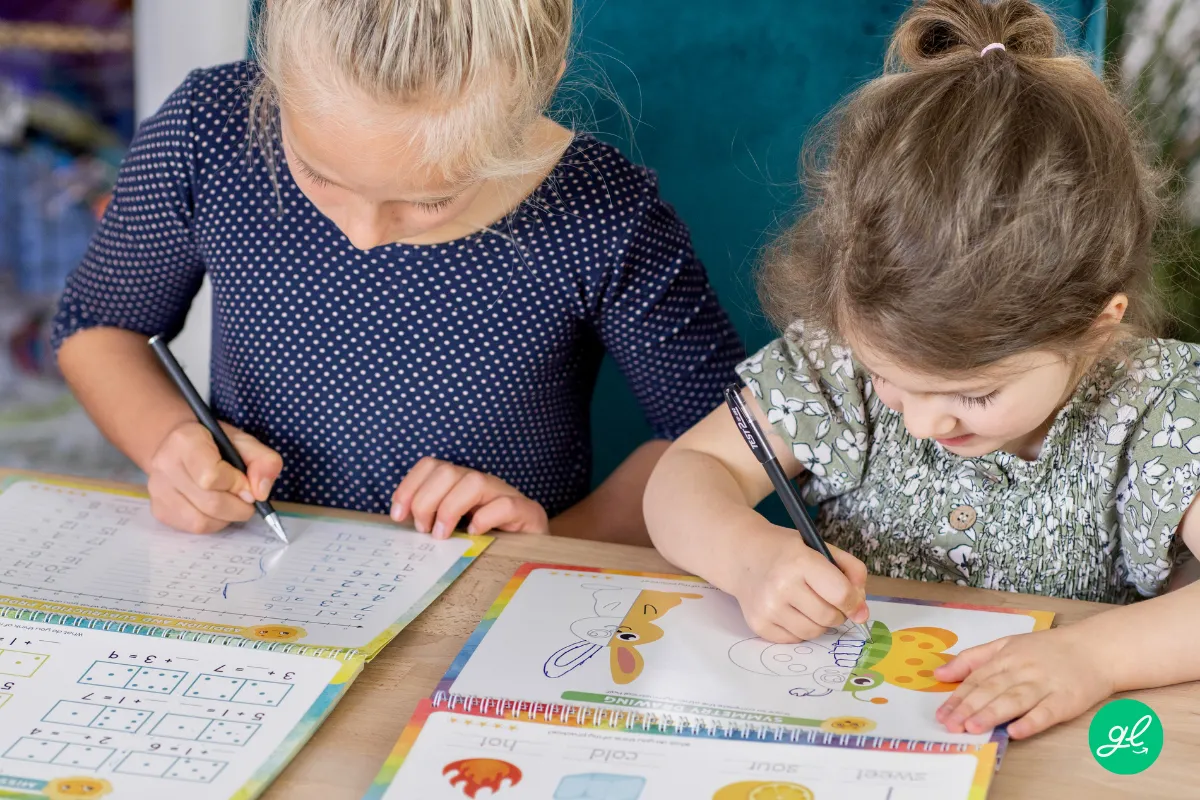
A review of handwriting research found that writing in cursive can stimulate brain areas associated with learning and memory. The authors connect the resulting neural activity with encoding new information, suggesting that deliberate hand movement can create conditions that support learning. This does not mean cursive is a shortcut to academic success, but it does show why handwriting deserves a place alongside keyboard work. Read the handwriting and learning research.
There is also a literacy connection. A study examining cursive instruction during the first year of primary school reported effects on reading and writing skill acquisition. For families deciding when to start cursive, the practical takeaway is to consider readiness, instruction, and consistency instead of treating cursive as an activity reserved only for older students. Children benefit when letter formation is demonstrated clearly and practiced in small, manageable steps.
- Learning and memory: Cursive writing engages brain activity associated with encoding and remembering new information.
- Reading and writing support: Early, structured cursive instruction can contribute to the development of foundational literacy skills.
- Fine-motor practice: Handwriting requires controlled movement and coordination that keyboard-based training does not provide in the same way.
- Fluency and focus: Repeated connected strokes give children a physical process for building smoother, more confident writing.
Research comparing handwriting and typewriting training in preschool children found that handwriting offers fine-motor benefits beyond keyboard practice. A keyboard still has an important place in modern learning, but it cannot replace the controlled pressure, direction, and continuous movement involved in forming letters by hand. See the study on handwriting and typewriting.
For homeschool parents, the best approach is not to add cursive as tedious fill-in work. Choose instruction that makes each stroke understandable, connect practice to language children can discuss, and keep sessions short enough for careful work. Meaningful poems, stories, or subject studies can give handwriting a purpose while children build the coordination that makes writing increasingly automatic.
What to Look For in the Best Cursive Handwriting Workbook for Kids
A strong cursive workbook should do more than show a finished alphabet and leave a child to copy it. The best choice gives children a clear path from first stroke to connected letter, provides enough practice to build confidence, and makes repetition feel purposeful rather than tedious. For homeschool families, the right format should also fit real teaching routines, including independent practice and repeated use.
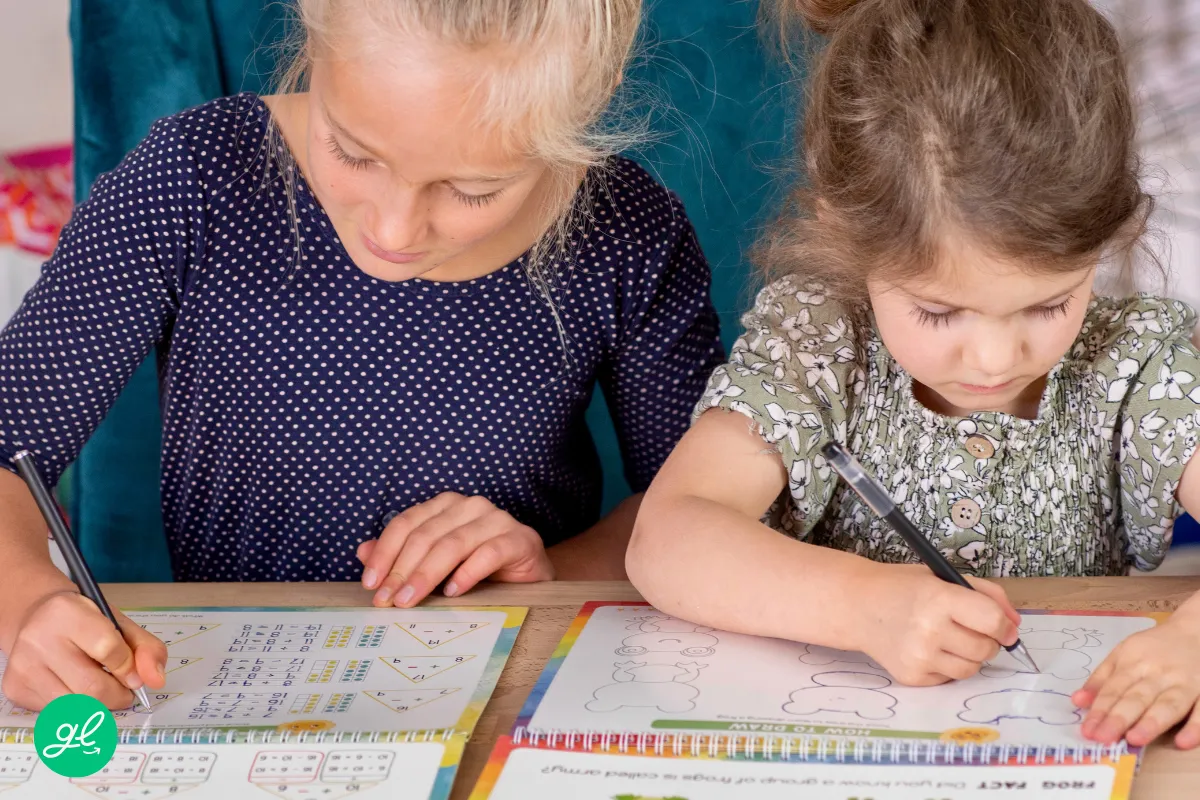
- Letter-formation instruction style: Look for guidance that children can feel and follow, not just faint arrows on a page. Grooved practice materials guide the pen through each shape, helping prevent incorrect letter forms during the early learning stage. This kind of multi-sensory formation supports the muscle memory children need to write consistently. For practical teaching ideas, see how to teach cursive at home.
- Practice volume: A workbook needs enough guided repetition for a child to move beyond recognition and produce each letter independently. At the same time, pages should not feel like meaningless rows. Consider whether the layout allows short daily practice, review of difficult letters, and steady progress without overwhelming the learner.
- Engagement: Children are more likely to practice when the material gives them something interesting to read and write. Poetry, history, animals, and other meaningful themes can turn letter formation into language-rich work. This matters especially for cursive for older kids, who may resist pages that look too young or repetitive.
- Reusable versus consumable design: Consumable pages can work well for a single pass, but reusable pages give children permission to try, erase through repetition, and try again. Grooved Learning's disappearing ink fades after roughly 20 minutes, so a child can revisit the same formation without a growing stack of marked-up pages.
Best-practice check: Choose a workbook that corrects formation at the point of practice, offers meaningful repetition, and lets mistakes become part of learning rather than a permanent record.
When comparing options, watch how each workbook handles the first few attempts. A child who is tracing a letter should receive enough sensory and visual guidance to understand its direction and shape. That support is especially valuable when a child has developed an inefficient letter pattern from copying unguided examples. Reusable practice can then make review calm and low-pressure, while engaging content gives the work a reason beyond filling a page.
The Best Cursive Handwriting Workbooks for Kids Compared
Families comparing cursive workbooks are usually balancing more than price. The right choice depends on how much guided instruction a child needs, whether practice should connect to a meaningful subject. And whether the workbook will serve one child once or several children over time.
Best value over repeated practice: A reusable workbook can cost more at checkout, but it may offer more practice opportunities than a low-cost consumable book.
.| Workbook | Ages | Instruction style | Practice volume | Reusable? | Price |
|---|---|---|---|---|---|
| Cursive Through Historical Poetry | Grades 3-8+. | Grooved tactile guidance. | 2 books, disappearing ink, and printable poetry unit study. | Yes. | $40. |
| Cursive Through the Animal Kingdom | Grades 3-8+. | Grooved guidance. | Workbook practice with an animal science unit study. | Yes. | $40. |
| Oak Meadow Cursive Workbook for Kids Ages 8-12 | 8-12. | Traditional workbook instruction. | More than 120 pages. | No, consumable. | $15. |
| The Complete Cursive Handwriting Workbook for Kids by Crystal Radke | 7-12. | Traditional practice exercises. | Workbook practice; page total varies by edition. | No, consumable. | About $5.32 at Target. |
| The Good and the Beautiful Handwriting | Varies by level. | Level-based handwriting curriculum. | 100 pages, approximately 3-4 sheets per week during a school year. | No, consumable. | Varies by level. |
Consumable workbooks are often the simplest low-cost option when one child needs a defined amount of practice. Their pages are used once, however, so the cost can rise when younger siblings need their own copies or when a child benefits from repeating a formation lesson.
Reusable options require a larger initial investment, but disappearing ink and tactile guidance make repeated practice possible without filling a shelf with replacement books. Grooved Learning's two cursive choices also add a subject connection, so handwriting practice can reinforce poetry or animal study instead of feeling like an isolated stack of rows.
Why Grooved Learning's Cursive Workbooks Stand Out
Many handwriting books offer a finite set of pages to complete once. Grooved Learning's Cursive Through Historical Poetry and Cursive Through the Animal Kingdom take a different approach: practice is tactile, reusable, and connected to ideas worth discussing. That combination makes handwriting feel less like filling rows and more like building a skill through meaningful daily work.
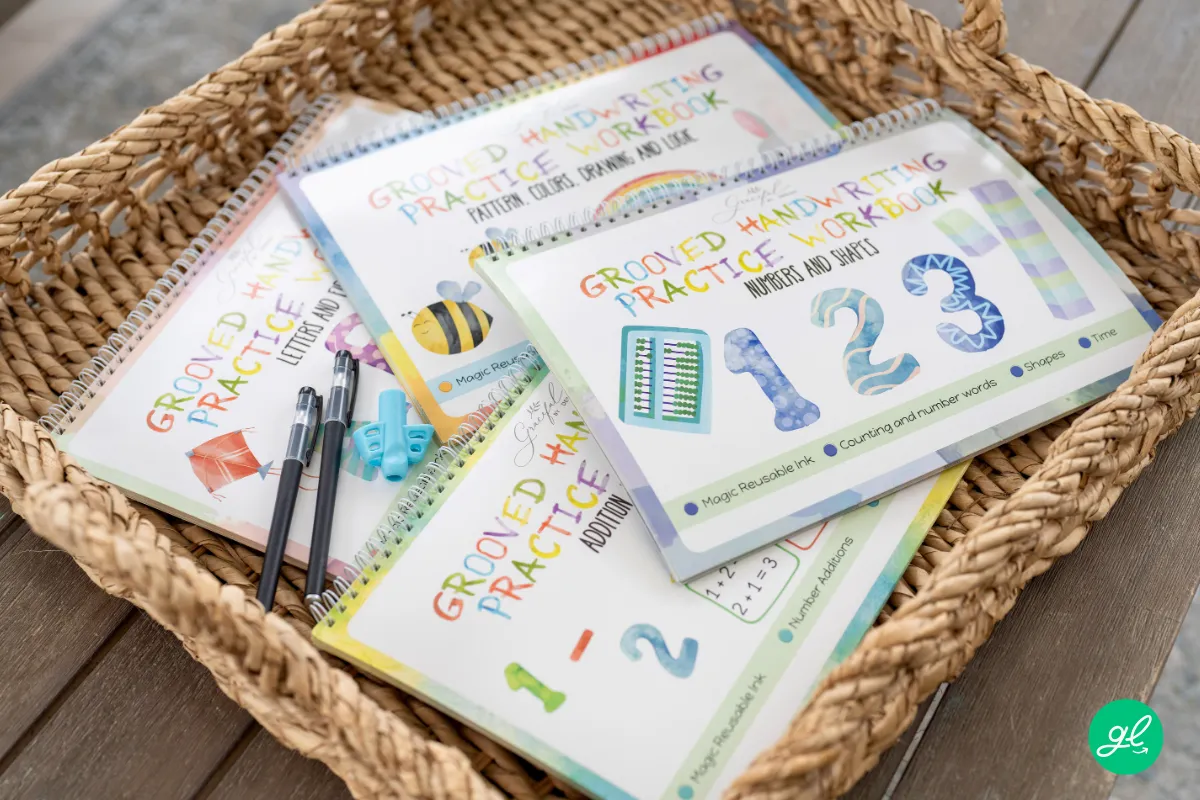
The groove in each letter gives a child's hand a physical path to follow. Tracing that path repeatedly supports muscle memory and helps make letter formation more consistent. Instead of relying only on visual imitation, children receive sensory guidance while they write. The practice can then move from larger models to smaller ones as control develops, giving older elementary students a clear progression rather than an overly childish starting point.
Highlight: The ink disappears in about 20 minutes, so a single practice page can be used again and again without filling the house with stacks of disposable worksheets.
What comes in each set
Each product is designed as a complete, open-and-go handwriting experience for grades 3-8 and beyond. Families receive the materials needed for guided practice, along with a subject connection that gives the writing a purpose.
- Two spiral-bound, landscape-format practice books: Letters & Transitions and Words & Sentences.
- Four disappearing-ink pens and four ink refills for repeated use.
- A printable unit study that connects Cursive Through Historical Poetry with history and poetry, or Cursive Through the Animal Kingdom with animal science.
- Grooved letter models that guide formation before students progress to smaller examples.
The two themes also make it easier to match practice to a child's interests. A student who enjoys poems, historical figures, and language may respond well to Historical Poetry. A child fascinated by animals may be more eager to copy words and sentences tied to the Animal Kingdom study. In both cases, the content gives homeschool parents something to read, discuss, and extend beyond handwriting time.
For families comparing reusable options, the reusable cursive handwriting bundle brings both themes together. You can also explore the full cursive collection to choose the format and subject that best fit your child's interests and practice goals.
How to Choose the Right Cursive Workbook for Your Child
The right workbook should fit your child's readiness, interests, and actual homeschool routine. A beautiful book that sits untouched is less useful than a simple resource your child can open, understand, and practice with consistently.
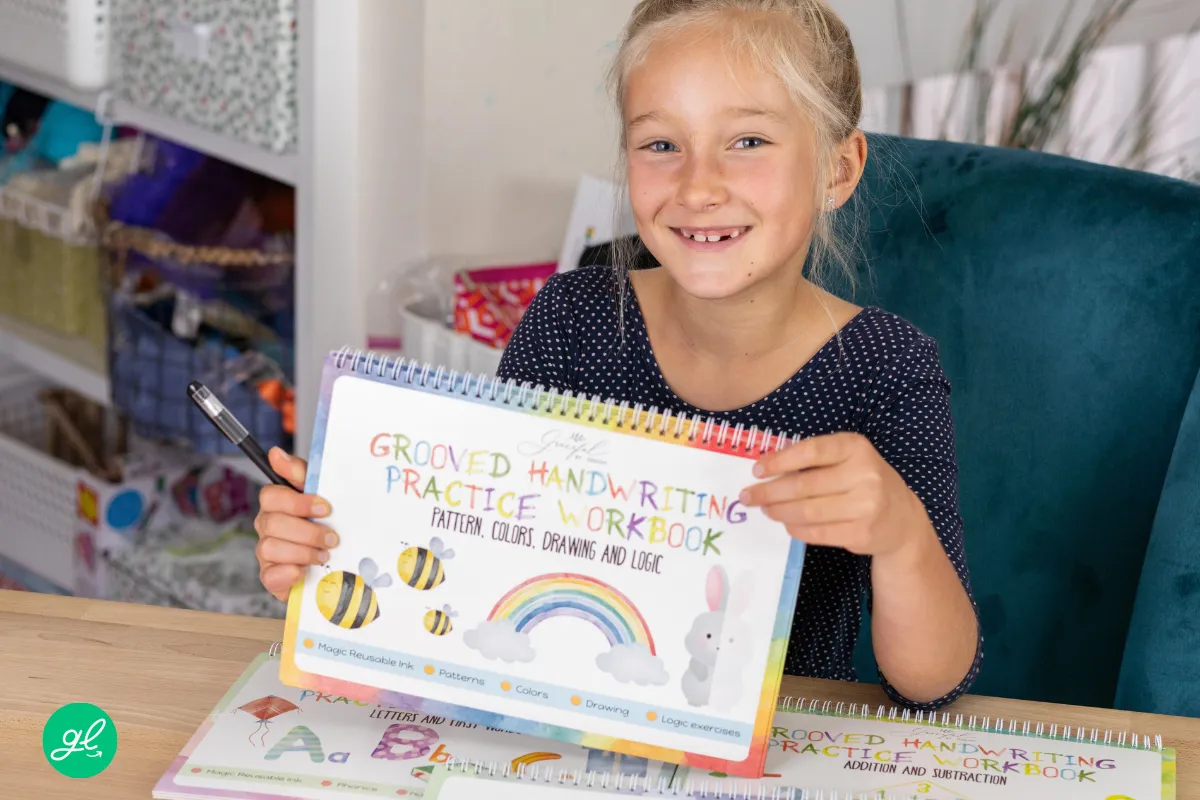
Choose the workbook that makes correct practice feel approachable, repeatable, and meaningful.
Match the book to age and readiness. Start with what your child can do comfortably, not only the grade printed on the cover. Look for readiness to control a pencil, follow a model, and form basic letters without frustration. If you are unsure when to begin, read this guide to when to start cursive. Older children may need a more mature presentation and enough space to refine letter connections, while younger learners may benefit from shorter, clearly guided practice.
Decide whether reusable practice matters. A consumable workbook can work well for one child completing a defined course. Reusable materials make more sense when siblings will share, when a child needs extra repetition, or when you want to revisit difficult letters later. With disappearing ink, the writing fades after roughly 20 minutes, so children can practice again without a page permanently recording every mistake. That can reduce anxiety and keep attention on the movement itself.
Choose content your child actually cares about. Poetry, animals, jokes, and interesting facts can make handwriting practice feel connected to real learning. Plain drills have a place, especially for focused letter formation, but meaningful content often gives children a reason to keep going. Consider whether your child would rather copy a short poem, learn about animals, or work through straightforward rows of letters.
Check how instruction is delivered. Tracing lines alone may not show a child where to begin, how to move, or when a letter shape has gone off track. Guided grooved or tactile materials reinforce formation through touch and movement, supporting the development of accurate muscle memory. Compare that with your child's needs and your preferred approach to cursive for older kids.
Set a rhythm your family can maintain. A few focused sheets each week usually fit homeschool life better than an occasional marathon session. Keep practice short enough for your child to finish with confidence, then return to it consistently. Watch for fatigue, celebrate smoother formation, and adjust the pace before handwriting becomes a daily battle.
When you are ready to compare formats and subjects, shop cursive handwriting workbooks that support purposeful, repeatable practice.
Not sure which of these cursive workbooks fits your child best? The questions below cover the most common decisions homeschool parents face.
Ready for guided, reusable cursive practice your child will actually enjoy? Shop Cursive Through Historical Poetry or Cursive Through the Animal Kingdom today.
Frequently Asked Questions
At what age should a child start using a cursive workbook?
Readiness matters more than a fixed birthday. A child is often ready when they can form basic print letters, hold a writing tool comfortably, and follow a simple visual or tactile path. Cursive can be introduced during the primary years, and research has examined benefits from teaching it early in primary education. This study on cursive instruction and reading and writing skills provides useful context for homeschool planning.
What should I look for in a cursive handwriting workbook?
Look for clear letter-formation guidance, enough repetition to build fluency, and content that keeps practice meaningful. A strong homeschool workbook should also match your child's age, attention span, and learning preferences. Multi-sensory guidance can reinforce correct formation instead of leaving children to copy shapes without knowing where each stroke begins and ends.
Is a reusable cursive workbook better than a traditional one?
Reusable and consumable books serve different needs. Reusable books are helpful when a child needs repeated practice or feels anxious about mistakes. Grooved Learning's books use disappearing ink that vanishes after roughly 20 minutes, allowing a child to practice the same formation again without filling another page. A traditional workbook may be the simpler choice when you want a dated record of completed work.
Are there cursive workbooks for older kids or beginners?
Yes. Beginners benefit from guided strokes, uncluttered examples, and short practice sessions. Older children may need larger writing space, a more mature subject, or a workbook that does not feel babyish. Choose by formation support and engagement rather than grade label alone. Handwriting practice also develops fine-motor skills in ways keyboard-based work does not, according to research comparing handwriting and typewriting.
How do I choose between different cursive curriculums?
Compare the teaching method, practice format, content, reuse options, and the amount of parent preparation required. For homeschool families seeking meaningful copywork, Grooved Learning's Cursive Through Historical Poetry and Cursive Through the Animal Kingdom connect letter practice with poetry and animal study. Start with the theme your child will want to revisit, then confirm that the workbook supports the level of repetition they need.
Ready to Shop a Meaningful Cursive Workbook?
The right workbook can make handwriting practice feel purposeful, engaging, and easy to use at home. Shop Grooved Learning's Cursive Through Historical Poetry and Cursive Through the Animal Kingdom bundle for reusable practice built around content children can enjoy. Shop the cursive handwriting bundle and give your homeschool routine a practical next step.

Written by
Jenna ColemanJenna Coleman is the founder of Grooved Learning, a former classroom teacher, M.Ed., and mom of three based in Pennsylvania. She creates hands-on, multi-sensory educational tools grounded in the Science of Reading. Every article is written from real classroom and parenting experience.
Learn more about Jenna →


