


When to Start Cursive: The Parent's Guide to Cursive Handwriting Practice
Most children are ready to start cursive between ages seven and nine, typically in second or third grade. At this stage, fine motor skills have developed enough for the continuous hand movements cursive requires. Research from Hetty Roessingh at the University of Calgary shows that Grade 2 is the natural transition point for introducing letter joins. Waiting until a child prints all letters legibly ensures they are ready for the smooth motion of script.
Ready to begin? Browse Grooved Learning's cursive collection to find the right workbook for your child's stage.
Many parents wonder whether teaching cursive still matters in a screen-heavy world. The answer is yes, and the reasons go far beyond tradition. Knowing when to start cursive gives your child access to brain benefits that typing cannot replicate. This guide walks through the readiness signs, age-by-age guidance, and practical steps to make cursive a rewarding part of your homeschool routine.
When To Start Cursive: Does Cursive Still Matter for Today's Kids?
Cursive remains a valuable skill because it builds neural pathways that printing and typing do not activate. Research from Frontiers in Psychology shows that handwriting leads to widespread brain connectivity patterns that typing does not produce. For homeschool parents deciding when to start cursive, the key takeaway is that the timing matters less than the commitment to regular practice.
Brain development and memory formation
The continuous motion of cursive changes how the brain processes written language. A 2024 study from the Norwegian University of Science and Technology found that handwriting activates broad brain connectivity networks across memory, attention, and language regions. When a child writes in cursive, the pen stays on the page for each word. This steady motion builds a physical memory of the word shape that reinforces spelling and reading.
For children who reverse letters like b and d, the connected flow of cursive reduces confusion. Each letter starts from the baseline and flows into the next, creating a unique spatial path that the brain can track. The Grooved Learning approach uses multi-sensory techniques rooted in the Science of Reading to make this process intuitive, even for children who struggle with print.
Why homeschool families have an advantage
Homeschool parents can introduce cursive when their child is developmentally ready, without waiting for a school district's timeline. This flexibility is one of the strongest arguments for teaching cursive at home. You can match the instruction to your child's fine motor development, attention span, and interest level. Most children who receive consistent instruction reach legible cursive by the end of second grade. Shop all Grooved Learning products to find tools that support this milestone.
At What Age Should a Child Start Cursive?
The ideal window for introducing cursive is between ages seven and nine, corresponding to second or third grade. At this point, children have the fine motor control to manage connected letter formations without frustration. Starting earlier risks frustrating a child who lacks the hand strength; starting later is perfectly fine and many children progress faster with the extra maturity.
Kindergarten, ages 5 to 6: Building the foundation
In kindergarten, the focus should be on pre-writing activities that build hand strength and pencil control. Coloring, drawing, tracing shapes, and dot-to-dot puzzles all develop the fine motor skills that cursive will later require. The goal is a mature tripod grip and the ability to form basic print letters. Roessingh's research confirms that children should print most upper and lowercase letters by the end of kindergarten before attempting cursive.
Grade 1, ages 6 to 7: Direct print instruction
First grade is the time for formal printing instruction. Lessons should be short and consistent, around 20 minutes daily. The focus is legible print, proper letter formation, and writing stamina. A child who can print clearly has a strong foundation for the transition to cursive. If your child still struggles with basic letter shapes, spend more time on print before considering when to start cursive.
Grade 2, ages 7 to 8: The sweet spot
Second grade is widely considered the best time to introduce cursive. Children at this age typically have the hand strength, letter knowledge, and attention span needed for connected writing. The Charlotte Mason approach recommends watching for readiness in manuscript printing rather than focusing strictly on age. If a child prints all letters legibly and shows interest in joining them, Grade 2 is the natural starting point. This is when Grooved Learning's cursive collection becomes the next logical step.
Grade 3, ages 8 to 9: Not too late
Third grade is absolutely not too late to start. In fact, many children benefit from the extra year of fine motor and reading development. A study by Hetty Roessingh notes that Grade 3 is when foundational cursive skills are consolidated, including control over shape, size, space, and slant. Children who start at this age often progress more quickly because their reading skills are stronger.
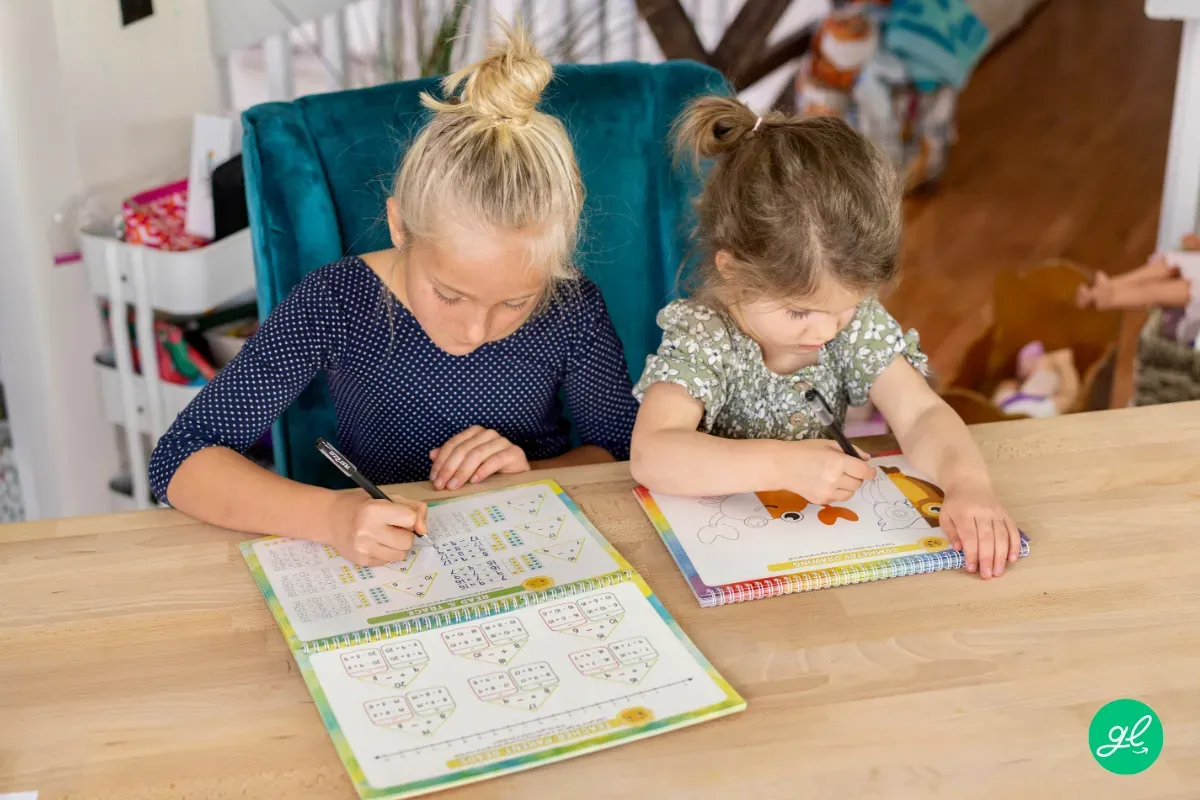
What Are the Signs Your Child Is Ready for Cursive?
Age alone does not determine readiness. Watch for specific behavioral and physical signs: legible print handwriting, a mature pencil grip. Solid letter recognition, genuine interest in writing, and the ability to focus on a 15-minute task. These five indicators are more reliable than a birth date.
- Can print most letters legibly. Before moving to cursive, a child should form all 26 print letters without prompting. The letters do not need to be perfect, but they should be recognizable. Frequent letter reversals or struggles with basic shapes mean more print practice is needed.
- Uses a proper pencil grip. A mature tripod grip using the thumb, index, and middle fingers is essential for the continuous motion of cursive. If your child still uses a fist grip, focus on grip-strengthening activities through play before introducing cursive.
- Recognizes all letters by name and sound. Cursive involves simultaneously reading and writing connected letters. A child who does not yet know all letter names and sounds will struggle with both the decoding and the physical act of cursive writing.
- Shows interest in writing. A child who asks to write notes, copies words they see, or enjoys drawing and coloring is showing natural curiosity. Forcing cursive on a reluctant child creates negative associations that are hard to undo. Wait for the spark.
- Can focus on a 15 to 20 minute activity. Research from early childhood education experts confirms that short, consistent lessons work best. Grooved Learning's reusable cursive handwriting workbook is designed for this exact practice length.
What Are the Benefits of Learning Cursive?
Learning cursive builds stronger neural connections for reading and spelling, reduces letter reversals for struggling readers, and allows faster writing speed once mastered. A 2020 study in Frontiers in Psychology found that cursive writing activates unique brain networks that support learning in ways that typing and printing do not.
Stronger reading and spelling skills
When children write in cursive, the brain learns the physical feel of a whole word as a single motion. This muscle memory reinforces spelling patterns over time. Instead of recalling each letter individually, the hand remembers the shape of the word. A study of 12-year-old children published in Frontiers in Psychology demonstrated that cursive handwriting activates more robust neural networks for letter recognition compared to typewriting.
| Skill Area | Printing | Cursive |
|---|---|---|
| Fine motor development | Stop-and-start strokes | Smooth, flowing hand control |
| Letter reversals | Common with b, d, p, q | Connected strokes reduce flips |
| Writing speed | Slower, frequent pencil lifts | Faster once flow is established |
| Word recognition | Brain sees isolated letters | Brain learns whole-word shapes |
| Neural activation | Moderate engagement | Broad connectivity across brain regions |
Support for struggling readers
Cursive is particularly valuable for children who find reading and spelling challenging. The connected letter forms reduce the visual confusion that causes letter reversals in dyslexia. Each letter in cursive has a distinct starting point and directional path, which makes it harder for the brain to flip letters like b and d. The steady flow also encourages children to read their own writing, reinforcing the connection between letter formation and word meaning. This multisensory loop is one reason Orton-Gillingham methods often incorporate cursive into structured literacy instruction.
How to Teach Cursive at Home
Teaching cursive at home requires no special training, only the right tools and a consistent routine. Start with warm-up strokes, use a grooved workbook for tactile guidance, practice 15 minutes daily, focus on letter connections first, and gradually introduce words and copywork.
- Start with basic stroke patterns and warm-ups. Before jumping into letters, spend several sessions on pre-cursive patterns. Practice loops, waves, hills, and valleys. Call them rainbow arches or roller coaster loops to keep it playful. These warm-ups build hand strength and introduce the continuous motion of cursive without the pressure of forming letters.
- Use a multi-sensory approach with grooved workbooks. The most effective way to teach cursive is to engage multiple senses at once. Grooved Learning's reusable cursive handwriting workbook uses physical grooves that guide the pencil along the proper letter path. The tactile feedback helps muscle memory develop correctly from the start. Research confirms that multisensory handwriting instruction creates more robust neural connections than single-sensory approaches.
- Practice 15 minutes daily, not two hours once a week. Short daily sessions are far more effective than long, infrequent ones. The brain builds motor pathways through repetition over time. A 15-minute daily session establishes muscle memory without causing hand fatigue or boredom. Grooved Learning's disappearing ink vanishes after about 20 minutes, which naturally signals the end of a practice session.
- Focus on letter connections before full words. Do not jump straight into sentences. Start with basic diagonal joins like ai, an, and am. Then move to more complex connections. Practice letter pairs until they feel smooth and natural. Once connections are comfortable, introduce short words like cat, dog, and run. This builds success step by step.
- Progress to short words, sentences, and copywork. Once your child can connect letters comfortably, introduce short sentences and eventually copywork. Grooved Learning's Animal Kingdom Cursive workbook pairs poetry and nature facts with cursive practice, keeping children engaged while they build their skills. Real-world writing tasks like thank-you notes and grocery lists give purpose to the practice.
Making Cursive Practice Fun and Screen-Free
The key to consistent practice is making it enjoyable. Disappearing ink adds novelty, theme-based copywork keeps children engaged, and real-world writing tasks show children why cursive matters. A positive early experience builds a habit that lasts.
The appeal of disappearing ink
Grooved Learning uses a special pen with ink that vanishes on its own within about 20 minutes. Mistakes do not feel permanent when they fade away. This magic factor keeps children coming back to the page and allows unlimited practice without printing new sheets. The cursive handwriting workbook with disappearing ink turns practice into a self-contained activity that children can repeat as often as they like.
Theme-based copywork
The content your child writes matters as much as the letter forms. Historical poems teach rhythm and rich vocabulary while the child builds muscle memory. Animal facts spark curiosity and keep reluctant writers engaged. The Animal Kingdom Cursive workbook combines both approaches with nature-themed copywork that makes each session feel like discovery rather than drill.
Real-world connections
Show your child why cursive matters in daily life. Ask them to write a grocery list, a thank-you note to a grandparent, or a short letter to a friend. These small tasks demonstrate that cursive is a tool for real connection, not just schoolwork. A simple reward chart for consistent practice can also build momentum. The goal is to create a positive association with handwriting that lasts well beyond the early years.
Frequently Asked Questions
What age should children start learning cursive?
Most children are ready for cursive in second grade, around ages seven or eight. At this stage, fine motor skills have developed enough for the joined letter strokes that cursive requires. A child who prints all letters legibly and shows interest in connected writing is developmentally ready regardless of exact age.
Does learning cursive help children with dyslexia?
Yes, cursive can benefit children with dyslexia. The connected flow of letters reduces visual confusion that causes letter reversals like b and d. Each cursive letter starts from the baseline and flows into the next, creating a distinct spatial path that makes flips less likely. Orton-Gillingham methods often incorporate cursive for this reason.
Is 3rd grade too late for a child to begin cursive?
Third grade is not too late and is actually a fine time to begin. By this age, children typically have better fine motor control, stronger reading skills, and longer attention spans. Many children who start in Grade 3 progress more quickly because they can focus on letter connections without struggling with basic pencil control.
Why are many public schools no longer teaching cursive?
Many public schools have reduced or eliminated cursive instruction to prioritize standardized testing content and keyboarding skills. However, about 21 states still require cursive instruction, and a growing body of research on the cognitive benefits of handwriting is prompting some districts to reconsider. Homeschool families have the advantage of choosing their own timeline.
How much time should a child practice cursive each day?
Short, daily sessions of 15 to 20 minutes are most effective. The brain builds motor pathways through consistent repetition over time. Longer sessions cause hand fatigue and diminishing returns. Grooved Learning's disappearing ink naturally signals the end of a session as it fades, making it easy to maintain a consistent routine.
Ready to Help Your Child Master Cursive?
Choosing the right time to introduce cursive is one of the best decisions you can make for your child's writing development. Starting at the right stage builds fine motor skills, strengthens reading connections, and creates a positive relationship with handwriting that lasts a lifetime. Grooved Learning's reusable workbooks are designed to make this transition smooth, screen-free, and genuinely enjoyable for both parent and child.
Shop the Grooved Learning cursive bundle today and give your child the gift of beautiful, confident handwriting.

Written by
Jenna ColemanJenna Coleman is the founder of Grooved Learning, a former classroom teacher, M.Ed., and mom of three based in Pennsylvania. She creates hands-on, multi-sensory educational tools grounded in the Science of Reading. Every article is written from real classroom and parenting experience.
Learn more about Jenna →


