


Reusable Workbooks for Kids: A Practical Guide
When a child needs more than one try to form a letter, solve a problem, or follow a line, a single-use page can feel limiting. Reusable workbooks for kids make it easier to repeat a skill without printing another sheet or worrying about a crossed-out first attempt.
Explore Grooved Learning's reusable Early Learning workbooks.
Reusable workbooks let children practice the same activity many times. Grooved pages add tactile guidance, disappearing ink resets with time, and wipe-clean or laminated pages can be erased by hand. The best choice depends on a child's age, the skill being practiced, and how much feedback or cleanup a family wants.
This guide compares the main formats and offers practical buying tips, age guidance, and simple ways to make repeated practice useful.
Why reusable workbooks for kids make practice easier
Reusable pages give children room to try, review, and try again. They can support short daily routines, reduce the need for replacement pages, and help adults see which movements or ideas need another calm round of practice.
Repetition without starting from scratch
Many early skills grow through steady practice. A child may understand how a letter should look but still need time to guide the pencil through each stroke. A reusable page keeps the task familiar, so more attention can go toward the movement itself.
Repeated work should still have a purpose. Instead of asking a child to fill every page, choose one small goal. That might mean tracing three letters with a smooth starting stroke, completing one matching activity, or saying the sound connected to a letter while writing it.
A lower-pressure way to make mistakes
An erasable or disappearing result can make an imperfect first try feel less permanent. Children can review what happened, reset the page, and attempt the same task again. Adults can keep the tone practical: notice one success, give one clear cue, then allow another try.
This approach works well for real family schedules. A five- or ten-minute routine can fit before lunch, after reading, or between homeschool lessons. It is usually easier to repeat a short focused session than to push through a long one.
Less paper to manage
Reusable materials can reduce the stack of printed practice sheets that families need to store or recycle. A compact workbook can also travel to a tutoring session, a grandparent's home, or a quiet waiting room. The value comes from choosing pages a child will truly revisit, not simply from owning more activities.
Grooved, laminated, or wipe-clean: which format fits?
Grooved pages give the hand a physical path to follow. Disappearing ink resets without wiping, while laminated and wipe-clean pages offer quick visible erasing. Each format solves a different practice need.
| Format | How it resets | Best fit | Consider |
|---|---|---|---|
| Grooved with disappearing ink. | Ink fades over time. | Letter and number formation with tactile guidance. | Needs the correct pen and time to reset. |
| Wipe-clean workbook. | Marks wipe from the coated page. | Fast repeat activities, matching, mazes, and tracing. | Marker and cleaning method matter. |
| Laminated pages. | Depends on the chosen marker or crayon. | Custom sheets and flexible homeschool practice. | May require preparation and storage. |
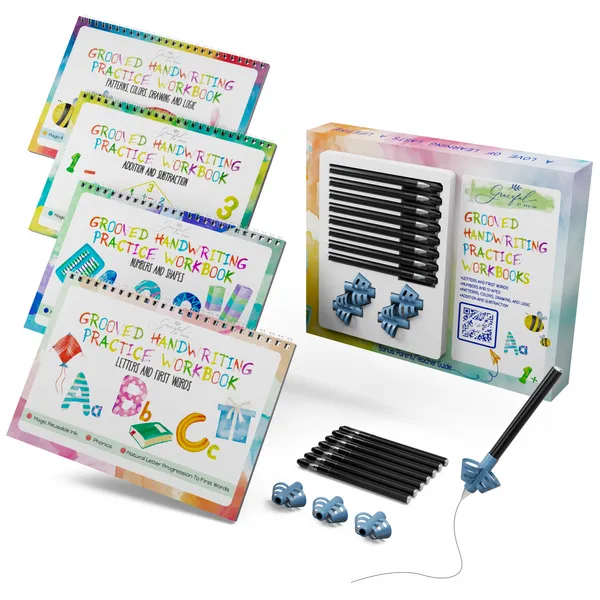
Grooves add a physical cue
A printed line shows where to move. A groove also gives the pen a path that a child can feel. That tactile cue can be helpful when the main goal is learning a consistent motion for letters, numbers, lines, or shapes.
Grooved Learning pairs grooved pages with disappearing ink, allowing a completed activity to return for another session. Families looking for broad early practice can review the combined reusable workbook set for ages 3-7.
Wipe-clean pages reset right away
Wipe-clean books are useful when a child wants immediate feedback and another try in the same sitting. They often work well for mazes, matching, drawing, or large tracing tasks. Check which writing tools the maker recommends, since not every marker wipes away from every coated surface in the same way.
Laminated pages offer flexibility
Lamination can turn selected printables or lesson pages into reusable tools. This can be a practical option when a parent, teacher, or tutor wants to customize the exact activity. The tradeoff is setup time, plus the need to organize loose pages and select suitable writing tools.
How to choose a reusable workbook
Choose by skill and daily use, not by page count alone. Look for an age-appropriate sequence, clear page design, comfortable writing feedback, dependable supplies, and activities a child can revisit with growing independence.
- Name the skill. Decide whether the child is working on pencil control, letter formation, numbers, language, or general early learning.
- Check the starting level. A helpful book begins where the child can succeed with light support, then builds in small steps.
- Compare writing feedback. Grooves guide motion by touch. Flat coated pages depend more on visual lines and adult modeling.
- Review the reset method. Consider whether your routine works better with ink that fades or a page that can be wiped at once.
- Confirm the supplies. Find out which pens, markers, refills, cloths, or cleaning methods the workbook needs.
- Inspect the layout. Clear directions, useful examples, and enough writing space help children focus.
- Plan for real use. Think about storage, travel, siblings, language needs, and how often the book will be opened.
Match challenge with readiness
Age labels offer a starting point, but the better question is what a child can do now. One preschooler may be ready to trace simple forms, while another may benefit from free drawing and broad line paths first. A good challenge feels achievable but still gives the child something to learn.
Look beyond the number of pages
A large workbook is not automatically a better choice. Reusable materials earn their place through repeat value. Look for pages that build a sensible sequence and support skills your child is likely to practice across several weeks or months.
Choose language intentionally
Language can be part of the learning goal, not an afterthought. Grooved Learning offers an English Early Learning option and a Spanish Early Learning option. Families who want both can compare the English and Spanish Early Learning bundle and decide how each language will fit into the weekly routine.
Which reusable workbook works for each age and routine?
The right reusable workbook fits both the child's current skill and the setting where practice happens. Younger children often need larger motions and close support. Older or more experienced learners may use focused pages more independently.
Preschool and pre-writing practice
For young learners, start with simple paths, shapes, hand control, and short sessions. A grooved path can give the pen a clear route, while a wipe-clean page can make drawing and matching easy to repeat. An adult can model one motion, then let the child explore without correcting every mark.
Stop while the activity still feels manageable. A child who completes a few focused movements and wants to return tomorrow is building a more useful routine than one who is asked to finish too much at once.
Kindergarten and early elementary use
As children begin connecting handwriting with reading and spelling, reusable pages can support deliberate practice. Ask the child to say a sound, identify a letter, or use a written item in a meaningful example. This keeps handwriting connected to language rather than treating it as an isolated task.
For a broad mix of early activities, families can compare Grooved Learning's Early Learning collection. Select the format and language that best support what the child is practicing now.
Homeschool, tutoring, and travel
Reusable books can act as a dependable warm-up in homeschool or tutoring sessions. The same page can help an adult notice progress over time without searching for a new worksheet each day. During travel, choose a compact activity and bring only the supplies needed for its reset method.
With siblings, each child can use the same material at an appropriate level, but adults should still give each learner a distinct goal. Reuse is most helpful when it supports focused instruction rather than identical expectations.
How can families use reusable workbooks effectively?
Use reusable workbooks in short, purposeful sessions. Model the task, let the child try, notice one useful detail, and return to the page later. Calm repetition is more useful than rushing through many pages.
Set one small goal
Before opening the workbook, name the goal in simple language. Try, "Today we will start this letter at the top," or. "Let's keep the pen inside this curved path." A clear goal gives the child something specific to notice and makes progress easier to recognize.
Model, practice, and review
Show one example at a natural pace. Then give the child time to try without taking over the pen. When the attempt is finished, point out something that worked and offer one practical cue for the next round.
If the page uses disappearing ink, review the work before it fades. If it wipes clean, pause before erasing so the child can see the result. The reset should support reflection, not erase the value of the effort.
Know when to stop
Short practice is enough when attention starts to drift or the child's hand becomes tired. Ending on a steady attempt protects the routine from becoming a struggle. Put the workbook in a consistent place and return at a predictable time.
Adults can also rotate activities. One day may focus on a grooved letter path, while another includes reading aloud, building words, drawing, or counting. A reusable workbook is one useful tool within a fuller learning day.
Compare Grooved Learning's English and Spanish Early Learning bundle.
Care tips that help reusable workbooks last
Use only the recommended writing tools, follow the maker's reset instructions, and store books and pens together in a dry, easy-to-reach place. Simple care protects both the page surface and the next practice session.
Use the correct pen or marker
Writing tools are not interchangeable across every reusable surface. A marker that works on one coated page may stain another, and a disappearing-ink workbook needs its intended pen. Check product directions before substituting supplies or using a cleaner.
Reset pages as directed
For wipe-clean pages, use the recommended cloth and method. Avoid hard scrubbing unless the instructions call for it. With disappearing ink, allow the marks to fade as designed rather than adding moisture or cleaning products.
Store the whole set together
Keep pens, refills, cloths, and the workbook in one small bin or pouch. Store pages flat or closed, away from spills and extreme conditions. A ready-to-use set removes friction when it is time for a short practice session.
Frequently asked questions
Are reusable workbooks good for kids?
They can be useful when the content matches a child's needs and the repeated practice has a clear purpose. The format makes another attempt easy, but thoughtful adult guidance and a well-chosen skill sequence still matter.
Do grooved handwriting books work?
Grooved books give the pen a tactile path, which can help a child feel the intended motion. They are not a replacement for modeling or instruction. Choose a book with suitable letter forms and guide the child through short, focused practice.
Are wipe-clean and disappearing-ink books the same?
No. Wipe-clean pages usually reset when marks are erased from a coated surface. Disappearing ink fades over time without wiping. Consider whether your child benefits more from an immediate reset or from time to review the finished page.
What age is best for reusable workbooks?
Readiness matters more than a single age. Young children may start with broad paths and shapes, while children ready for letters and numbers can use more focused pages. Always compare the book's activities with what the child can do now.
How often should a child use a reusable workbook?
A short session several times a week can be more manageable than one long session. Adjust the routine based on attention, comfort, and progress. Stop before fatigue turns the activity into a struggle.
Find a reusable workbook that fits your learner
The best reusable workbook is one that supports the next useful skill and fits naturally into family life. Grooved Learning creates practical reusable materials designed to help children return to meaningful practice with clear guidance.
Explore reusable Early Learning workbooks from Grooved Learning.

Written by
Jenna ColemanJenna Coleman is the founder of Grooved Learning, a former classroom teacher, M.Ed., and mom of three based in Pennsylvania. She creates hands-on, multi-sensory educational tools grounded in the Science of Reading. Every article is written from real classroom and parenting experience.
Learn more about Jenna →


