


Phonics Sound Cards for Reading and Spelling Practice
A child can name every letter and still struggle to connect print with speech. That missing link can slow decoding, spelling, and the confidence needed to put ideas on paper.
Shop Code Breakers Sound Cards
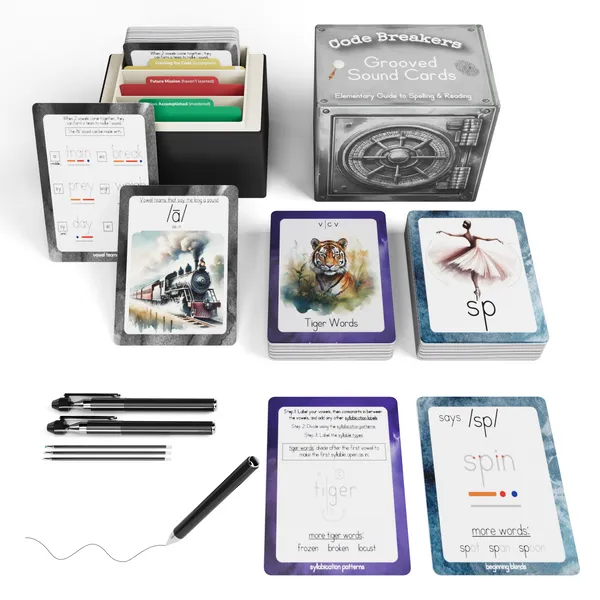
Phonics sound cards make sound-symbol mapping visible and hands-on by pairing speech sounds with the letters or patterns that represent them. Children say a sound, watch how their mouth forms it, trace the matching symbol, and connect that knowledge to decoding, spelling, and writing. The National Reading Panel explains that systematic phonics teaches letter-sound correspondences and their use in reading and spelling. Code Breakers Sound Cards make this practice tactile with 180 deeply grooved cards and a mirror that helps children notice how they form sounds. Together, these steps give families and educators a clear routine for building stronger links among spoken sounds, printed symbols, and written words during short, focused lessons.
To use them well, begin with the question, "What are phonics sound cards?" From there, identify the features that make practice meaningful. Then match each card activity to the reading, spelling, or writing skill a child is building.
The path begins with a clear look at how these cards connect spoken sounds, printed symbols, and purposeful practice.
What are phonics sound cards?
The sound-symbol connection
Phonics sound cards are teaching tools that connect a grapheme with its matching phoneme. A grapheme is a written letter or letter group, while a phoneme is a spoken sound. The cards help children link what they see with what they say and hear.
This link matters because written words use letters to stand for sounds. The National Reading Panel describes systematic phonics instruction as teaching letter-sound links and using them to read and spell words. A card makes that key idea visible and easy to revisit.
Letter-sound cards focus on matching print and speech. Articulation cards also draw attention to how the mouth forms a sound. Both can support sound awareness, but they serve different teaching needs. A child may use either type before applying the sound in a word.
A place in structured literacy
Within a structured literacy reading and spelling system, sound cards support a planned sequence rather than serving as a separate activity. An adult can introduce one sound, review known sounds, and then use them for blending or spelling. This keeps each card tied to real reading and writing.
Some cards show only a letter pattern and a picture cue. Others add a mouth image, a keyword, or a surface children can trace. The best choice matches the skill being taught and helps the child notice the sound-symbol link.
Code Breakers Sound Cards offer a tactile option, so children can trace a grooved grapheme while saying and hearing its sound. This approach brings sight, sound, speech, and touch into one focused task.
Short and meaningful practice
Parents, homeschool families, tutors, and teachers can use phonics sound cards in short practice sessions. Start with a few cards the child knows, then add one new or less familiar sound. Keep the goal clear: accurate recall, careful speech, blending, or spelling.
A simple session can mix quick review with one focused task. Useful options include those listed below. Stop while attention is still strong, and note which sounds need another look.
- Say a sound, find its card, and trace the grapheme.
- Show a card, ask for the sound, and use it in a word.
- Arrange cards to build a word, then blend the sounds from left to right.
- Sort cards by shared sounds or spelling patterns.
The card is a prompt, not the whole lesson. Conversation, movement, reading, and writing give that prompt meaning. With brief and focused practice, adults can respond to errors calmly and help children build a stronger sound-symbol map.
How sound cards build sound-symbol mapping
Sound-symbol mapping is the link a child builds between a spoken sound and the letters that spell it. Phonics sound cards make that link concrete by giving the child a spelling to see, a sound to say, and a surface to trace. This supports decoding, spelling, and writing because the same sound-symbol map is used in each direction.
This link helps turn print from a set of marks into language a child can read and write. The National Reading Panel explains systematic phonics as teaching letter-sound links and using them to read and spell words.
Phonics sound cards make this idea concrete. Each card gives the child a clear spelling to see, a sound to say, and a surface to touch. These actions bring attention back to the same useful question: "What sound does this spelling represent?"
The visual pathway
First, the child looks closely at the letter or letter team on the card. This step helps the child notice that one sound may appear as one letter or a group of letters. The adult can name the spelling, point to it, and keep the child's focus on the print.
Next, show the card again without giving the answer right away. Ask the child to say the sound, then use it in a word. This short recall step helps the child move from recognizing the card toward reading unfamiliar print.
The auditory pathway
Saying the sound adds a clear speech cue to the printed spelling. The child hears the sound while seeing its written form, which keeps speech and print connected. Slow, careful practice also gives the adult time to hear whether the child is producing the intended sound.
Keep the focus on the sound, not only the letter name. Then model how separate sounds blend into a word. In synthetic phonics, children learn to turn letters into sounds and blend those sounds into recognizable words. This process supports decoding because the child can work through a new word instead of relying on memory alone.
The tactile pathway
Touch adds another way to attend to the spelling. As the child traces a grooved card, the hand follows the letter form while the eyes watch and the voice says the sound. This is not a separate trick; each action points to the same sound-symbol link.
The Code Breakers Sound Cards bring seeing, saying, hearing, and tracing into one repeatable routine. An adult might guide practice in this order:
- Look at the spelling and name what the child notices.
- Say the sound clearly while tracing the grooved form.
- Find the sound in a spoken word, then read a word that uses it.
- Say a word, listen for the sound, and write the matching spelling.
Reading and spelling use the same map in opposite directions. During decoding, the child sees a spelling and recalls its sound. During spelling, the child hears a sound and chooses the letters that represent it. Moving between both tasks helps make phonics practice useful beyond the card itself.
Why articulation awareness matters for reading and spelling
Articulation awareness helps children notice how a sound is made before they connect it to print. When a child watches the lips, tongue, teeth, airflow, and voice, similar sounds become easier to compare. This gives the adult another calm way to guide reading and spelling practice without turning every sound into a guessing task.
Articulation awareness means noticing what the mouth and voice do while making a sound. A child may watch the lips close, feel the tongue move, or notice whether the voice is on. These small clues make an unseen sound easier to study.
This awareness gives children another way to compare sounds that seem alike. Instead of relying only on hearing, they can pause and notice how each sound feels. That careful attention can support phonemic awareness, which includes hearing and working with individual sounds in spoken words.
Making sounds visible
A mirror turns mouth movement into something a child can see. While saying a sound, the child can watch the lips, tongue, and teeth. The adult can model the sound first, then invite the child to compare the two mouth shapes.
The mirror included with Code Breakers Sound Cards brings this step into hands-on phonics practice. The child can look, say, listen, and trace while focusing on one sound. This keeps the mouth movement tied to the sound and its written symbol.
From careful speech to decoding
Articulation awareness is useful when children need to tell close sounds apart. For example, they can notice whether the voice vibrates or where the airflow stops. The goal is not perfect speech. It is close attention to the parts of a spoken word.
That attention supports decoding because children must connect written letters with spoken sounds. The National Reading Panel describes systematic phonics as teaching letter-sound links and using them to read and spell words. Mouth clues can make those sound links more concrete during practice.
An adult can keep the routine simple. Show the card, model the sound, and let the child watch in the mirror. Then ask what moved and whether the voice was on. Finally, connect that sound to its letter or spelling pattern.
Using mouth clues for spelling
Spelling asks a child to move from a spoken word toward written symbols. Articulation awareness can slow that process down in a useful way. A child can say a word carefully, notice each sound, and choose the letters that match.
This approach can also reveal sounds that are easy to miss in quick speech. Try stretching a short word without adding extra sounds. Then have the child say each sound, check the mouth movement, and write the matching letters.
Pairing this routine with a structured literacy reading and spelling system keeps sound work connected to reading and writing. The mirror is not a test or a promise of a set result. It is a practical tool for helping children observe, compare, and practice sounds with care.
How to use phonics sound cards for daily practice
Use phonics sound cards in short, predictable lessons that move from sound review to blending, spelling, and writing. Choose a small set of cards, model one sound clearly, and give the child a chance to trace, say, read, and write with that sound. A calm five-to-ten-minute routine is often enough for useful practice.
A short routine with phonics sound cards can fit into a calm five-to-ten-minute lesson. Keep the focus narrow by choosing only a few sounds or one word pattern each day. The goal is steady practice, not finishing the whole deck.
Follow the same basic order each time: warm up, review, blend, segment, write, and check. This clear sequence supports the systematic use of letter-sound links for reading and spelling.
Set up a focused session
Before starting, choose cards your child already knows and add one that needs more practice. Place a writing tool and reusable surface nearby. If you use Code Breakers Sound Cards, have the color-coded blending bars ready for the blending step.
Sit beside the learner so you can model a sound without turning the session into a test. Give brief, clear prompts. If a sound is hard, model it once, let the child try, and move forward.
The daily practice sequence
- Warm up: Pick two familiar cards. Say each sound together while the child looks at the symbol and traces its tactile grooves.
- Review sounds: Show three to five cards, one at a time. Ask for the sound, not the letter name, then give quick help when needed.
- Blend: Place two or three cards in reading order. Use the color-coded blending bars to guide the child's eyes while stretching and joining the sounds.
- Segment: Say one short word aloud. Have the child repeat it slowly, listen for each sound, and choose the matching cards in order.
- Write: Ask the child to trace the grooves, say the sound, and then write the matching letter or word. This links touch, speech, reading, and spelling.
- Quick check: Mix the cards and revisit one sound, one blend, and one written word. Note what to review tomorrow, then end the session.
Blending asks children to turn letters into sounds and join those sounds into a word. This process is central to synthetic phonics instruction. During segmenting, reverse the task so the child hears a word and maps each sound to a card.
Keep practice calm and useful
Stop while the learner is still engaged. A short session with close attention is more useful than a long session filled with guessing or strain. The reusable format makes it easy to revisit the same cards without making the practice feel new each day.
Adjust the card set based on the quick check. Keep secure sounds in the warm-up and bring harder sounds back one at a time. On another day, pair the cards with the Code Breakers curriculum so the same sound moves into reading and writing practice.
Explore the Code Breakers Bundle
Choosing phonics sound cards that support real learning
Strong phonics sound cards do more than show a letter and ask for a quick answer. They help children see a spelling, say its sound, trace the form, blend the sound into words, and use it while spelling or writing. The best choice matches the child's phonics sequence and gives the adult a clear way to teach.
What each card type teaches
Common flash cards often pair a printed letter with a picture cue. They can support quick review, but the child may only look and answer. Articulation cards shift attention to how a sound feels and looks in the mouth. This focus can help a child notice lips, tongue, teeth, and airflow.
Multisensory or tactile cards add touch and movement to the lesson. A child may trace a letter while saying its sound, then use the same card for blending or spelling. This active link matters because systematic phonics instruction teaches children to use letter-sound links when reading and spelling.
| Feature. | Common cards. | Articulation cards. | Tactile cards. |
|---|---|---|---|
| Main focus. | Recall a sound. | Notice the mouth. | Link sound and touch. |
| Child action. | Look and answer. | Watch and copy. | Trace, say, blend, and write. |
| Design details. | Clear print. | Mirror or mouth image. | Grooves and blending guide. |
| Best fit. | Fast review. | Speech-sound awareness. | Reading, spelling, and handwriting practice. |
Features that keep practice connected
Choose cards with clear print, a simple sound cue, and a task your child can repeat. Then check whether the set supports the next step. A card should help move practice from saying one sound to blending a word, spelling it, and writing it.
Code Breakers Sound Cards combine deep tactile grooves with a reusable writing surface. Color-coded blending bars guide children as they join sounds. An included mirror lets them watch their mouth while making a sound. These details bring tracing, articulation, blending, spelling, and handwriting into one routine.
A practical choice for your learner
Start with the skill that needs the most support. A child who knows sounds but struggles to blend needs more than recall cards. A child who cannot tell similar sounds apart may benefit from a mirror and clear articulation cues. Children who need help linking sound to print may gain more from tracing and writing.
Also consider how the cards fit with the rest of your teaching. A set becomes more useful when its sound cues and steps match later reading and spelling work. Families seeking that kind of sequence can explore the broader structured literacy reading and spelling system.
Where Code Breakers Sound Cards fit in a structured literacy routine
Code Breakers Sound Cards fit before, during, and after reading or spelling work. They help the adult introduce a sound, give the child a hands-on cue, and bring that sound back when it appears in a word. Used this way, the cards support instruction instead of sitting apart as a memorization activity.
Code Breakers Sound Cards give the adult and child a shared way to study a sound before reading or spelling with it. The child can see the symbol, say the sound, trace the groove, and watch how the mouth moves.
In a structured literacy routine, the cards are not a separate activity or a test of quick recall. They prepare the child for focused work in the workbooks, then return when a sound needs more practice.
Start with clear, adult-led sound practice
Begin by choosing a small set of Code Breakers Sound Cards that matches the lesson. The adult models each sound, draws attention to mouth movement, and guides the child's finger through the groove. This keeps the practice calm and clear.
Ask the child to repeat the sound and connect it with its written form. If two sounds are easy to mix up, compare them side by side. The goal is careful attention, not speed.
This approach fits the purpose of systematic phonics. According to the National Reading Panel report, systematic phonics teaches letter-sound links and their use in reading and spelling.
Move from the card to the workbook
After the sound is clear, move into a matching workbook lesson. The child can use the sound while reading, blending, spelling, or writing. This step connects a focused card prompt with the larger task of working through words.
The Code Breakers curriculum brings the cards and reusable workbooks together for this purpose. The adult still leads the lesson, gives feedback, and adjusts the pace. The materials support instruction, but they do not replace it.
- Introduce or review the target sound with a card.
- Model the sound and guide the child's tracing.
- Use the sound in the matching workbook activity.
- Return to the card if the child needs a clearer cue.
Build confidence through useful repetition
Repetition works best when each pass has a clear purpose. One review might focus on saying the sound. Another might focus on tracing its written form, blending it into a word, or using it while spelling.
Keep corrections simple and specific. Model the sound again, guide one more trace, and return to the word. A short review can preserve momentum while giving the child another chance to make the sound-symbol link.
Over time, the cards can shift from lesson openers to brief review tools. Adults can bring back sounds that need support while letting secure sounds appear in reading and spelling tasks. This responsive cycle keeps practice focused and helps the child notice steady progress.
Common mistakes to avoid with sound card practice
The most common sound card mistakes are moving too fast, practicing too many cards at once, and stopping at recall instead of applying sounds in words. Keep practice short, correct gently, and always connect the card back to reading, spelling, or writing. This keeps the routine purposeful for the child and useful for the adult.
Phonics sound cards work best when practice stays short, active, and tied to real reading and spelling. The goal is not to race through a stack. Each sound should become something a child can hear, say, trace, write, and use with growing confidence.
Sessions that run too long
More practice is not always better practice. A long session can wear down focus and turn a helpful routine into a source of stress. Stop while your child is still engaged, even if you have not reviewed every card.
Choose a small group of cards and revisit them often. Keep known sounds in the mix so your child experiences success alongside new work. This calm pace makes practice feel manageable and leaves room for playful review.
Memorizing cards without using sounds
A child may name a sound from a familiar card yet struggle to use it in a word. This is why card recall should lead into blending, spelling, and reading. Systematic phonics instruction teaches letter-sound links and their use in reading and spelling.
- After reviewing a sound, ask your child to find it at the start or end of a spoken word.
- Blend the sound with other known sounds, then read the word as a whole.
- Say a simple word and ask your child to write the letters that match the sounds.
Skipping writing also removes an important tactile step. Pairing cards with the Code Breakers curriculum can connect tracing and sound practice with reading, spelling, and writing. That link helps children use what they know beyond the card stack.
Missing mouth movement and meaningful review
Do not overlook how a sound feels and looks when it is spoken. Let your child watch your mouth, then use a mirror to compare lip, tongue, and jaw placement. The mirror included with Code Breakers Sound Cards supports this close look at sound formation.
Avoid keeping cards as an isolated review activity. Bring a practiced sound into a book, a label, a child's name, or a short spelling task. Meaningful use makes each session more engaging and shows why the sound matters.
Shop Code Breakers Sound Cards
Frequently Asked Questions
How do phonics sound cards help with reading?
Phonics sound cards connect a spoken sound with the letters that represent it. Children can say the sound, trace the spelling, and then blend it into words. This supports the letter-sound knowledge used in decoding. The National Reading Panel explains that systematic phonics instruction teaches children to use letter-sound correspondences to read and spell words.
What is the difference between letter-sound cards and articulation cards?
Letter-sound cards mainly show a letter or spelling pattern and its matching sound. Articulation cards also draw attention to how the mouth forms that sound. They may show lip and tongue placement or include a mirror for observation. Code Breakers Sound Cards combine sound-symbol practice, tactile tracing, and a mirror so children can connect what they see, feel, hear, and say.
Can phonics sound cards be used for spelling practice?
Yes. A child can say a word, separate its sounds, and select the cards that represent those sounds. Then the child can trace or copy each spelling pattern before writing the complete word. This sequence links listening, sound-symbol mapping, and handwriting. Start with simple words, then introduce patterns such as digraphs and vowel teams as the child's phonics knowledge grows.
How do you use phonics sound cards in the classroom?
Use phonics sound cards in short, focused routines with one new sound or spelling pattern at a time. Model the sound, let students observe mouth movement, and have them trace while saying it. Next, practice blending the sound in words and writing one or two examples. Review known cards regularly, and group students when they need practice with different patterns.
How do I choose the right phonics sound cards for my child?
Choose cards that match the phonics sequence your child is learning and clearly connect sounds with their spellings. Look for a complete range of common spelling patterns, simple guidance for adults, and features your child can use purposefully. Tactile tracing and articulation support may help make practice more concrete. Begin with patterns the child nearly knows, then add new cards gradually.
Ready to Make Sound Practice Easier and More Useful?
Waiting to build a steady sound practice routine can let confusion and frustration become harder to address. Starting now gives each practice session a clear focus and helps families create consistency before learning gaps feel overwhelming. With a useful tool ready, adults can guide children through sounds, spelling, decoding, and writing without planning a different activity each day.
Ready to make practice more hands-on? Begin with a few focused minutes, keep the routine calm, and adjust the pace as your child becomes more comfortable. Use the cards during reading, spelling, or writing time so each lesson reinforces the same sound-symbol connection. Review the product details, decide how the cards fit your current lessons, and contact the Grooved Learning team if you have questions.

Written by
Jenna ColemanJenna Coleman is the founder of Grooved Learning, a former classroom teacher, M.Ed., and mom of three based in Pennsylvania. She creates hands-on, multi-sensory educational tools grounded in the Science of Reading. Every article is written from real classroom and parenting experience.
Learn more about Jenna →


