


Phonemic Awareness vs Phonics: A Parent-Friendly Guide
Understanding phonemic awareness vs phonics helps parents choose the right kind of reading practice instead of wondering why a well-planned lesson is not clicking.
Make sound-to-letter practice clear and hands-on with Code Breakers Sound Cards.
Phonemic awareness is the ability to hear and manipulate individual sounds in spoken words. Phonics teaches the relationship between those sounds and written letters or letter patterns. Children need both: phonemic awareness prepares the ear, while phonics connects what they hear to the print they read and write.
The terms sound similar because both concern the sounds in language, but they describe different jobs. A child might be able to blend /m/ /a/ /p/ into "map" without seeing letters. That is phonemic awareness. When the child sees map, connects each letter to a sound, and reads the word, that is phonics.
This distinction gives you a practical way to respond when a child struggles. You can listen for whether the difficulty begins with hearing the sounds or with connecting those sounds to print. Then you can practice the missing step in short, focused sessions that build confidence.
Phonemic Awareness vs Phonics: The Key Difference
Phonemic awareness works entirely with spoken language, while phonics uses written language. A phonemic awareness activity can be completed with eyes closed because it asks a child to hear, blend, separate, add, or remove sounds. A phonics activity requires letters because it connects sounds with print.
Phonemic awareness trains the ear
A phoneme is the smallest meaningful sound unit in a spoken word. The word "ship" has three phonemes: /sh/, /i/, and /p/. Although ship has four letters, the letters s and h work together to represent one sound. Phonemic awareness helps a child notice and work with those three sounds before print enters the activity.
Useful phonemic awareness tasks include identifying the first sound in "fish" and blending /s/ /u/ /n/ into "sun." You can also change the /m/ in "map" to /t/ to make "tap." These activities strengthen the sound-processing foundation used in reading and spelling.
Phonics connects the ear to the page
Phonics gives visible symbols to the sounds a child can hear. A child learns that m commonly represents /m/, sh commonly represents /sh/, and some spellings can represent more than one sound. With systematic teaching, children move from simple, consistent patterns to more complex ones.
Grooved Learning supports this connection through tactile practice that lets children see, say, and trace letters. The goal is not memorizing whole words by shape. It is understanding the code well enough to decode unfamiliar words and encode spoken words in writing.
| Feature | Phonemic Awareness | Phonics |
|---|---|---|
| Main focus | Individual spoken sounds | Sounds connected to print |
| Requires letters? | No | Yes |
| Example | Blend /c/ /a/ /t/ | Read the printed word "cat" |
| Supports | Sound analysis and manipulation | Reading and spelling words |
How Do Phonemic Awareness and Phonics Work Together?
Phonemic awareness and phonics form a sequence and then reinforce each other. Children first notice and manipulate spoken sounds. They then connect those sounds to letters, blend printed words for reading, and segment spoken words for spelling. Practice in one area makes practice in the other more meaningful.
From spoken sound to decoded word
Imagine a child hearing /r/ /u/ /n/. When the child combines those sounds and says "run," the child is blending phonemes. Next, show the letters r, u, and n. The child can attach a familiar sound to each letter and blend again, this time decoding a printed word.
The reverse process supports spelling. A child hears "run," segments it into three sounds, and selects a letter for each one. Reading moves from print to speech, while spelling moves from speech to print. Both depend on accurate awareness of the sounds inside the word.
Why explicit order matters
Children benefit from a clear teaching sequence rather than disconnected worksheets or random letter practice. Start with a small group of useful sound-letter relationships. Practice hearing those sounds, connect them to print, and use them to build and read words. Add new patterns once the earlier ones are secure.
This approach is part of what parents will see in a well-designed, plain-language explanation of structured literacy. Instruction is direct, cumulative, and responsive, so a child does not have to guess what a word says or infer a rule without enough examples.
Grooved Learning makes the sequence concrete with guided, multisensory materials. Tracing while saying a sound can help a child attend to the letter form and its sound at the same moment. That coordinated practice is especially useful when paper-only drills feel abstract or frustrating.
Which Skill Should Your Child Practice First?
Begin with the point where your child's understanding becomes uncertain. If the child cannot blend, separate, or identify sounds in spoken words, focus first on phonemic awareness. If the child handles spoken sounds but struggles when letters appear, focus on phonics while continuing brief oral sound practice.
Check sound skills without showing print
Ask your child to complete three quick oral tasks. Can they tell you the first sound in "moon"? Can they blend /f/ /i/ /sh/ into "fish"? Can they say "smile" without /s/? Keep the exchange light. You are noticing a pattern, not giving a test or expecting perfection.
If these tasks are difficult, spend more time on listening games. Model the answer, repeat it together, and then try a similar word. Use counters or small blocks to represent sounds when segmenting. Physical objects make an invisible sound sequence easier to notice without introducing letters too soon.
Check sound-letter connections with print
If oral sound tasks are comfortable, show a few letters or spellings the child has been taught. Ask for their sounds, then build a short word using only familiar patterns. Notice whether the child can say each sound and blend the complete word without guessing from a picture or the first letter.
A child may need support in both areas, and that is normal. Continue a minute or two of oral blending and segmenting before moving into letter work. If you are comparing programs, this guide to choosing a reading and spelling curriculum can help you look for a clear sequence, direct teaching, and appropriate practice.
Age-Appropriate Activities That Build Both Skills
Effective activities match a child's current development, use words the child can understand, and remain short enough to end successfully. Younger children benefit from playful oral listening. As children become ready for print, add explicit letter-sound practice, word building, decoding, and spelling in a steady sequence.
Ages 3 to 4: Play with spoken language
At this age, keep the emphasis on listening and enjoyment. Read rhyming books, pause before an easy rhyme, and let your child finish it. Sort household objects by their first sound. Say two simple words and ask whether they begin the same way. Clap syllables in family names, then listen for smaller sounds in short words.
- Sound hunt: Find three objects that begin with /b/.
- Rhyme choice: Ask whether "cat" rhymes with "hat" or "cup."
- Robot talk: Say /m/ /a/ /p/ slowly and ask your child to blend the word.
Do not worry if manipulating individual phonemes is still hard. Model the task, celebrate participation, and stop after five playful minutes. The aim is attentive listening, not racing ahead.
Ages 4 to 6: Connect sounds and letters
Once a child can hear and blend simple sounds, introduce letters in a planned order. Practice a sound aloud, trace or build its letter, and then use it in short words made from familiar patterns. Grooved Learning materials can add touch and movement, which helps keep attention on the connection between sound and symbol.
- Move a counter: Push one counter for each sound in "shop."
- Build and change: Build "sat," then change one letter to make "sit."
- Read and spell: Decode a short word, cover it, and build it from sounds.
Ages 6 to 8: Deepen the code
Older beginners and developing readers still benefit from phonemic awareness, especially when learning complex spellings. Ask children to compare sounds in words, manipulate phonemes, and map sounds to letter teams. Practice should connect directly to reading and spelling rather than becoming a separate, lengthy drill.
Use word chains such as "rain," "train," "trail," and "tail" to focus on one change at a time. Discuss which sound changed and how the spelling changed. If you need a broader view of possible approaches, compare the features highlighted in this overview of learn-to-read programs for children.
How Can You Build a Simple Daily Routine?
A useful home routine takes about ten to fifteen minutes and follows the same calm pattern: listen for sounds. Connect one or two sounds to print, build or read words, and finish with successful reading. Consistency matters more than length, and each activity should use patterns the child has already learned.
A practical 12-minute lesson
- Two minutes, oral warm-up: Blend three spoken words or segment words into sounds.
- Three minutes, review: Revisit familiar letter-sound relationships with cards or tiles.
- Four minutes, build and read: Make several short words, changing one sound at a time.
- Three minutes, connected reading: Read a short passage that uses the patterns practiced.
During each step, model first when needed. Say, "I hear three sounds in map: /m/ /a/ /p/," while moving three counters. Then invite your child to try. Immediate, gentle correction prevents confusion: name the sound, have the child repeat it, and return to the word.
Keep progress visible and pressure low
End while your child still has energy. Record one pattern that felt easy and one that needs another look tomorrow. If frustration rises, reduce the number of words or return to an easier sound game. Steady success builds willingness to practice, which creates more opportunities for learning.
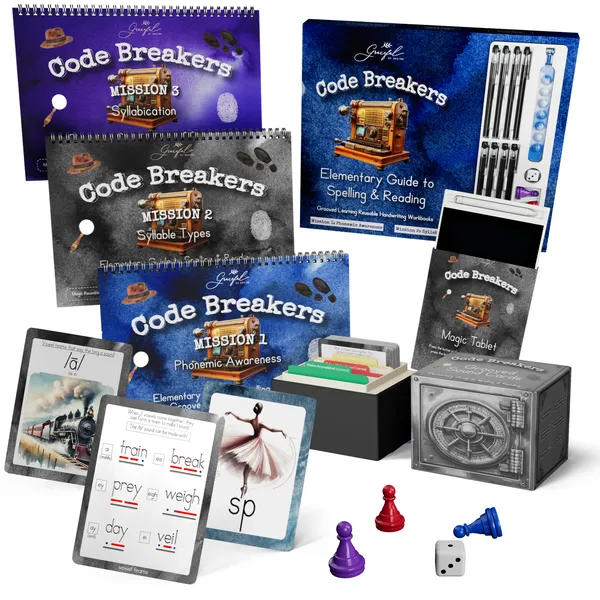
Grooved Learning's tactile, structured approach can help families make this routine concrete. Explore the Code Breakers learning approach when you want a guided path that brings sound, touch, reading, and spelling into the same focused lesson.
Common Teaching Mistakes and Better Alternatives
The most common mistakes are introducing print before a child can hear the sounds, teaching too many patterns at once, encouraging guesses, and continuing after frustration takes over. Better instruction identifies the uncertain step, models it clearly, provides focused practice, and moves forward only when the child is ready.
Do not treat the two skills as interchangeable
Showing the letter b and asking for its sound is phonics, not phonemic awareness. Asking for the first sound in "ball" is phonemic awareness. Use the first task when checking print knowledge and the second when checking sound awareness. Clear labels help you choose an activity that addresses the actual difficulty.
Do not ask children to guess words
Pictures and context can support comprehension, but they should not replace decoding. When a child meets an unfamiliar printed word, guide attention through its letters and sounds. If the spelling pattern has not been taught, supply the word and explain the new pattern rather than turning the moment into a guessing game.
Do not confuse longer practice with better practice
Ten focused minutes usually accomplish more than a tiring hour. Choose a small objective, such as blending three-sound words or reading words with sh. Offer enough examples to establish the pattern, then finish with an easy success. Review the same skill the next day before adding something new.
A calm response to errors matters. Instead of saying, "No, try again," point to the uncertain part, give the sound, and blend the word together. Grooved Learning encourages hands-on repetition that feels purposeful, helping children experience correction as useful information rather than failure.
Frequently Asked Questions
Parents often want to know when to begin, whether one skill can replace the other, and how to respond when progress is slow. The short answer is to teach sound awareness and phonics explicitly, connect them in practice, watch the child's response, and seek support when difficulties remain persistent.
Is phonemic awareness the same as phonics?
No. Phonemic awareness is the ability to hear and manipulate individual sounds in spoken words without using print. Phonics is the teaching of relationships between those sounds and written letters or letter patterns. They are distinct skills, but children use them together when reading and spelling.
Can you teach phonics without phonemic awareness?
You can introduce letters and sounds, but phonics is much harder to use if a child cannot hear the sounds inside words. A child needs enough phonemic awareness to blend sounds for reading and segment words for spelling. Brief oral sound practice should accompany phonics instruction.
What age should phonemic awareness and phonics begin?
Playful listening activities can begin during the preschool years. Explicit phonics usually begins when a child is ready to connect sounds with print, often around ages four to six. Readiness varies, so follow the child's skills rather than relying only on age or grade level.
What if my child still struggles with sounds and letters?
Return to the last skill your child can complete successfully, then teach the next step explicitly in short sessions. If difficulty persists despite consistent instruction, speak with the child's teacher and request a reading assessment. Early, specific support is more useful than waiting for the problem to resolve itself.
When phonemic awareness vs phonics is clear, reading support becomes much easier to plan. Listen first, connect sounds to print, practice in a thoughtful sequence, and adjust without pressure. Those simple habits give children a dependable route into accurate reading and confident spelling.

Written by
Jenna ColemanJenna Coleman is the founder of Grooved Learning, a former classroom teacher, M.Ed., and mom of three based in Pennsylvania. She creates hands-on, multi-sensory educational tools grounded in the Science of Reading. Every article is written from real classroom and parenting experience.
Learn more about Jenna →


