


How to Use Decodable Passages at Home
Ten focused minutes with the right passage can strengthen an entire reading routine. The key is connecting what your child sees, says, hears, spells, and writes.
Decodable passages are short texts built around phonics patterns a child has already learned, giving them practice with specific phonics skills. At home, use them in a calm, adult-led routine: preview the target sounds, have your child read aloud, and offer gentle feedback when needed. Follow the reading with a few words for spelling and handwriting so your child connects each sound with its letters and movement. Keep practice brief and consistent, then revisit the passage to build accuracy, expression, and confidence without making home learning feel heavy. When you need fresh material, the Groovie support tool can help you create personalized resources while keeping you central to the teaching. Together, these steps make one simple text a connected reading, spelling, and handwriting routine.
If you are wondering why these carefully chosen texts work so well, start with their purpose before planning the routine. What are decodable passages? comes next, followed by the practical steps that connect sounds, reading, spelling, and handwriting. That is where the path begins.
What are decodable passages?
Decodable passages are short reading texts built around phonics patterns a child has already learned. Most words can be read by matching letters with sounds, rather than relying on clues or guesses. This gives children a clear way to practice new skills in connected text.
A controlled path into connected reading
A decodable passage limits its words and sentences to a planned set of sound-spelling patterns. For example, an early passage may focus on short vowels and simple consonant-vowel-consonant words. Later passages can add digraphs, vowel teams, or more complex word parts.
Uncontrolled text does not follow that careful sequence. A storybook may include patterns the child has not learned, even when its topic seems easy. That text still matters for shared reading and rich language, but it serves a different purpose.
Decodable passages let children apply a taught skill while reading sentences with meaning. This matters because early reading depends on phonological awareness and mapping speech sounds to printed letters. A review of early reading development explains this key link.
Matching the passage to the lesson
The best passage is not simply marked for a grade level. It matches the sound-spelling pattern taught in the current lesson. A child learning the digraph sh, for example, needs a passage with enough sh words to practice that pattern.
- Check which sound-spelling pattern the passage targets.
- Confirm the child has learned that pattern before reading.
- Notice whether most words use known patterns.
- Choose a short text that allows calm, accurate practice.
This match helps the child use what was taught instead of facing a page full of unknown patterns. Families can pair passages with structured literacy practice that connects reading, spelling, and hands-on work with sounds.
One part of a structured literacy routine
Decodable passages are a practice tool, not a complete reading program. They work best after direct teaching and before review through spelling, handwriting, or sound work. An adult can listen, offer a calm correction, and ask a simple question about meaning.
A full routine also includes adults reading rich books aloud, talking about ideas, and building vocabulary. Over time, the child learns more patterns and can read a wider range of text. Decodable passages support that move by giving each new skill a useful place to take hold.
Keep the goal clear: accurate reading with understanding, not racing through the page. When a passage fits the lesson, children can focus on the print, make sense of the sentence, and build confidence through real success.
How to prepare decodable passages before reading
A smooth reading session begins before your child reads the first word. The goal is not to remove every challenge from the passage. Instead, prepare just enough so your child can focus on using the sound patterns they already know.
That focus matters because early reading depends on phonological awareness and matching speech sounds to printed letters. This research on early reading skills explains why sound-to-letter mapping is a key foundation for reading.
A simple setup routine
Use this short routine to choose and prepare decodable passages without turning reading time into a long lesson. Stay beside your child and adjust each step based on what you notice.
- Choose a passage that fits current instruction. Check the main sound pattern before reading. Your child should have already learned that pattern during a lesson.
- Scan for possible barriers. Read the passage yourself and mark words that may need brief support. Do not preteach every unfamiliar word.
- Preview the target sounds. Show the letter or letter team, say its sound, and ask your child to repeat it. Then blend one sample word together.
- Explain only the words that need it. Briefly introduce an unusual name or a word with a pattern not yet taught. Keep the explanation clear and short.
- Set one calm purpose. Tell your child what to notice while reading, such as a target sound or the story's main event. Then begin while attention is fresh.
Sound review without overload
A sound preview should feel like a quick warm-up. You might say the sound, trace its spelling, and blend one related word. For a tactile option, previewing sounds with grooved cards lets a child see, hear, and feel the pattern.
Keep the review narrow. If the passage practices short a, there is no need to review every short vowel first. When your child already knows the target pattern, a simple reminder may be enough. More review can wait until you see a real need.
A calm purpose and stopping point
Before reading, give the session a purpose that supports attention without adding pressure. Ask your child to listen for the target sound or find one detail in the story. This gives reading a clear direction while keeping the passage meaningful.
Plan to stop while your child can still work with care. A short session can include the preview, one reading, and a brief talk afterward. If you need a passage matched to a child's interests, adult-led teaching support can help you prepare one while you guide the lesson.
Preparation should make the reading task clear, not perfect. When a passage feels too hard even after a brief preview, choose an easier one. That choice protects the purpose of decodable passages: practicing known sound patterns in connected text.
How should your child read a decodable passage aloud?
Reading aloud lets you hear how your child uses the phonics skills in a decodable passage. Your role is to listen, wait, and offer a useful prompt when needed. This keeps the child doing the reading while you provide calm support.
Give the child time to attempt each word
Ask your child to begin, then stay quiet while they work through the text. A short pause does not always mean they are stuck. They may be recalling a sound, blending parts, or checking whether the word makes sense.
If your child stops at a word, wait a few seconds before stepping in. Then point to the first grapheme and ask for its sound. This approach supports the sound-to-letter mapping that is foundational to early reading.
Avoid saying the whole word too soon or asking your child to guess from a picture. Instead, guide only the part that is causing trouble. The goal is not a perfect first read; it is active practice with the taught sound pattern.
Prompt sound-by-sound or by chunks
Match your prompt to the word and the phonics skill your child knows. For a short word, point under each grapheme as the child says each sound. Then ask them to blend the sounds from the beginning without long pauses.
- For a simple word, say, "Touch each sound, then blend it."
- For a longer word, cover part of it and read one chunk at a time.
- For a known word part, ask, "What sound does this team spell?"
- After an error, return to the letters and try the word again.
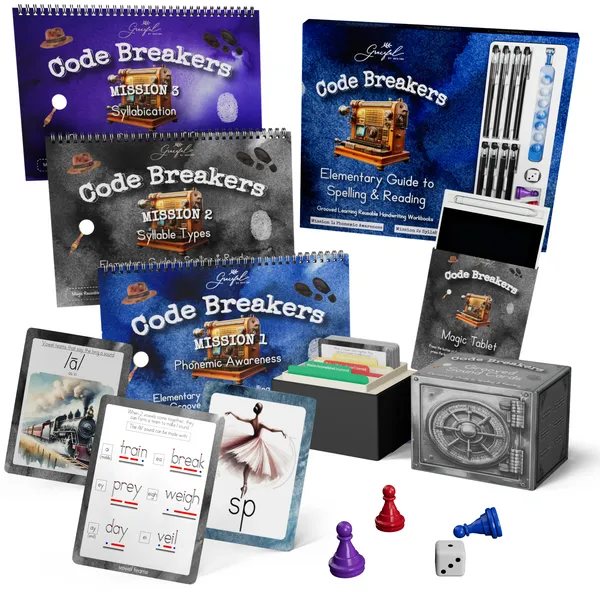
Keep prompts brief so your child can hold the sounds in memory. Tactile tools for Code Breakers Sound Cards can also help before oral reading. Use them to review a tough pattern, then return to the passage.
Reread for phrasing and notice effort
Once your child has decoded the passage, invite a second read. The first read may sound slow because the child is solving words. On the next read, ask them to group words into phrases and attend to punctuation.
Fluent reading includes accuracy, pace, expression, and phrasing. It is not a race. If the second read is smoother, name what changed: "You blended that word right away," or, "That pause helped the sentence sound clear."
Notice useful effort instead of praising speed alone. You might point out careful blending, a self-correction, or steady work through a hard line. This same calm routine fits well within Code Breakers reading and spelling practice because it keeps attention on sounds, letters, and meaning.
Connect reading to spelling and handwriting
Reading a passage is only one part of learning a new sound pattern. A short follow-up lets a child use that pattern in spelling and handwriting. This shift moves the child from reading printed words to building and writing words from heard sounds.
Dictation that starts with sound
Choose two or three words from the decodable passage, then say each word without showing it. Ask the child to repeat the word, stretch its sounds, and name the letters that represent them. This practice matters because early reading depends on mapping speech sounds to printed letters.
Keep dictation calm and brief. If the child misses a sound, say the word again and help them listen for that one part. Then let the child correct the word. The goal is careful sound work, not a perfect page.
Stay with the same focus pattern found in the day's decodable passages. A child practicing short a does not need a surprise spelling rule. This close match makes the task easier to understand. It also shows how one phonics skill works across reading and writing.
Word building before writing
Some children can hear the sounds but need help holding them in order. Build one word with letter tiles, cards, or movable letters before asking for handwriting. Change one sound at a time, such as moving from map to mat, and ask what changed.
- Say the word and have the child repeat it.
- Move one marker or tile for each sound.
- Choose the letters that match those sounds.
- Read the finished word, then write it once.
This routine links listening, spelling, reading, and writing without adding a long worksheet. A hands-on hands-on structured literacy support can help adults keep those steps clear and steady.
One meaningful sentence
End by choosing one useful sentence from the passage. Read it together, talk about what it means, and then ask the child to copy it. One sentence gives enough space to practice letter shape, spacing, and punctuation without tiring the child's hand.
You can also dictate that sentence after the child has copied it. Copying provides a model, while dictation asks the child to recall the sounds and spellings. Research-based guidance notes that a brief spelling task after reading reinforces sound-to-letter mapping.
Tactile grooved handwriting practice can make this final step feel more secure. The grooves guide letter movement while the child writes words connected to a story they just read. That connection gives handwriting a clear purpose and helps the child finish with a small, visible success.
A simple weekly routine for decodable passages
A steady routine can fit into a busy homeschool week without taking over the day. Plan four or five practice blocks of 10 to 15 minutes. Use one new passage each week, then return to it for short rereads and spelling work.
Starting with one new passage
Choose a passage that uses phonics skills your child has already learned. Before reading, preview the main sound pattern and practice two or three words from the text. This brief warm-up helps your child begin with a clear goal.
Ask your child to read aloud while you follow along. When a word is hard, pause and guide them back to its sounds. This supports the letter-sound mapping that forms a key part of successful early reading.
The weekly rhythm can stay simple: first choose the text, preview the target sounds, read aloud, give calm support, and finish with one follow-up.
| Practice point. | First session. | Later sessions. |
|---|---|---|
| Text choice. | Introduce one new passage. | Use the same passage. |
| Sound work. | Preview the target pattern. | Review only as needed. |
| Reading goal. | Decode each word with care. | Build smoother phrasing. |
| Adult support. | Give prompts and feedback. | Pause before stepping in. |
| Follow-up. | Discuss the passage. | Spell words from the passage. |
Use this as a planning guide, not a checklist to complete perfectly every time.
Short rereads and spelling follow-up
On the next practice day, reread the same passage instead of adding a new one. Keep the focus narrow: accurate words, smooth phrases, and natural expression. Fluency includes accuracy and expression, not speed alone, according to a review of early reading development.
After a reread, choose three to five words that share the week's sound pattern. Say each word, help your child stretch its sounds, then ask them to spell it. Tactile tools for previewing sounds can also make this step more concrete.
Keep the spelling follow-up brief. It should connect reading and writing without making the session feel heavy. End by asking one simple question about the passage, so meaning stays part of the work.
Knowing when to move on
Move to a new passage when your child reads the current one with few prompts and can explain its basic meaning. Listen for smoother phrasing, but do not wait for a perfect performance. A calm, accurate read is enough.
If your child still guesses, skips words, or needs frequent help, keep the passage for another session. Review the target sound before reading again. You can also shorten the passage and finish it across two practice blocks.
Some weeks will need more rereads than others. That is useful information, not a setback. Let your child's reading guide the pace while keeping the weekly routine simple and steady.
Need fresh practice that still keeps you in the teaching role? Explore Grow learning resources or try the Groovie tool to create personalized decodable passages for your next short lesson.
How Groovie can support adult-led practice
Personalized decodable passages can make practice feel relevant while keeping the phonics goal clear. Groovie helps an adult create reading material around a child's current skill and interests. The parent, tutor, or educator still chooses the skill, guides the reading, and responds to the child's needs.
This adult role matters because early reading depends on phonological awareness and mapping speech sounds to printed letters. That link between sounds and letters is described in a review of early literacy development. A tool can prepare useful material, but a caring adult provides the clear teaching and timely support.
Passages matched to the lesson
Start by telling Groovie which sound, spelling pattern, or phonics skill the child has already learned. Then ask for a short passage that gives that skill useful practice in connected text. You can also request a topic the child enjoys, such as pets, space, cooking, or soccer.
Before reading, check the passage yourself. Make sure the words match the lesson and remove any patterns that have not been taught yet. During reading, listen closely and offer a calm prompt when the child gets stuck. Groovie's Groovie teaching support helps prepare resources, while you remain the teacher.
Spelling and handwriting follow-up
A personalized passage can become the start of a fuller literacy lesson. After reading, choose a few words that contain the target pattern. Say each word, ask the child to name its sounds, and then guide them as they spell it. Keep the list short enough for careful thought.
You can also ask Groovie for a sentence prompt tied to the passage. The child might copy one useful sentence or write a new one with a target word. This turns reading, spelling, and handwriting into connected practice. It also gives you a clear view of what the child can do without help.
Simple prompts for the adult
Good requests tell Groovie what the child knows, what needs practice, and what should wait. A clear prompt might ask for a brief story using short-vowel words while avoiding an untaught pattern. You can then adjust the result before sharing it with the child.
- Ask for one target sound or spelling pattern at a time.
- Name any word patterns the child has not learned yet.
- Request two spelling words and one short handwriting prompt.
- Review the passage, then guide the child through it aloud.
As the child grows, your prompts can grow too. You might request longer passages, richer topics, or review of more than one known skill. The Grow learning resources can help adults plan meaningful next steps while keeping practice steady, personal, and guided.
What if decodable passages feel too hard?
A hard passage is useful information, not a sign that your child cannot read. It may contain a sound pattern that needs more teaching first. Research on decoding difficulty also connects it with reading miscues and passage fluency. Pause, find the sticking point, and adjust the practice.
When the passage causes guessing
First, check whether your child knows the sound patterns used in the passage. Ask them to read a few matching words before trying the full text. If those words are hard, return to the pattern and model how to blend each sound.
When your child guesses, calmly point back to the letters. Ask, "What sound does this part spell?" Then help them blend the word and reread the sentence. A quick round of tactile sound review can make the next attempt feel more manageable.
You can also cover the lines below the one being read. This keeps the page from feeling crowded and helps your child focus. If several words still require help, switch to a passage with an earlier skill. Save the harder passage for later.
When rereading sounds choppy
Choppy reading often means your child is still using much of their attention to decode. Keep the passage short and let accuracy come before smoothness. Read one sentence aloud with natural phrasing, then invite your child to read that same sentence.
On another reading, listen for one small change, such as a smoother phrase or a clean ending. Do not turn the reread into a speed test. If the second reading brings more strain, stop and choose an easier passage for the day.
When motivation or spelling stalls
Motivation can dip when every line feels like a test. Let your child choose between two suitable passages or take turns reading sentences. You can also use personalized passage support to make practice match a child's current skills and interests.
Spelling may not transfer right away, even after a word is read correctly. Choose one or two words from the passage and say each sound slowly. Have your child write the matching letters, then compare the spelling with the printed word.
End while your child still has some energy. Note which pattern caused trouble, so you can review it before the next passage. If the same issue keeps appearing, share the example with your child's teacher or reading specialist.
Frequently Asked Questions
Why are decodable passages important for reading?
Decodable passages give children controlled practice with phonics patterns they have already learned. Instead of relying on context alone, readers connect printed letters with spoken sounds across complete sentences. This practice can strengthen accuracy, fluency, and confidence. Choose passages that match the child's current phonics instruction, as recommended by Reading Universe, then gradually add less-controlled books as decoding becomes more secure.
How do decodable passages support structured literacy?
Decodable passages support structured literacy by letting children apply explicitly taught sound-letter patterns in connected text. A practical sequence is to preview the target sound, read aloud, discuss meaning, spell several words, and write one sentence. Keep the adult nearby to offer calm, immediate correction. This sequence connects reading, spelling, and handwriting while keeping practice systematic and clear.
Can decodable passages be used for handwriting practice?
Yes. After reading, choose two or three words that feature the target phonics pattern. Say each word, have the child segment its sounds, then write the word and a short sentence. Handwriting turns the same sound-letter connection into a physical action, which can strengthen memory. Keep writing brief and meaningful, and focus on careful formation rather than filling a full page.
How can adults support children using decodable passages?
Adults should select a passage that matches the child's current phonics skill, preview the target sound, and ask the child to read aloud. When an error occurs, calmly point to the letters, review the sound, and blend the word again. Finish with a brief meaning question and specific encouragement. Groovie can help adults create personalized resources, while the adult remains the guide.
Ready to Make Decodable Passage Practice Easier?
Delaying a simple routine can make each session harder to start and leave useful reading, spelling, and handwriting connections unused. Starting today with one short, repeatable routine gives your child a familiar path and gives you a clear teaching role. Over the next several sessions, that steady structure can make practice easier to manage and help you notice where more support is needed.
Ready to request a more focused plan for the sounds and skills your child is practicing now? Start a 7-day free trial of Groovie to create personalized passages and lesson ideas while keeping you at the center of instruction. You can also use those ideas alongside Code Breakers resources for hands-on review that connects reading, spelling, sounds, and handwriting.

Written by
Jenna ColemanJenna Coleman is the founder of Grooved Learning, a former classroom teacher, M.Ed., and mom of three based in Pennsylvania. She creates hands-on, multi-sensory educational tools grounded in the Science of Reading. Every article is written from real classroom and parenting experience.
Learn more about Jenna →


