


How to Teach Blends and Digraphs: A Practical Guide
When a child reads ship as separate sounds or drops the l in flag, the issue is often not effort. The child may simply need a clearer way to hear, see, say, and trace how blends and digraphs work. This practical routine shows how to teach blends and digraphs without turning phonics into a long or frustrating lesson.
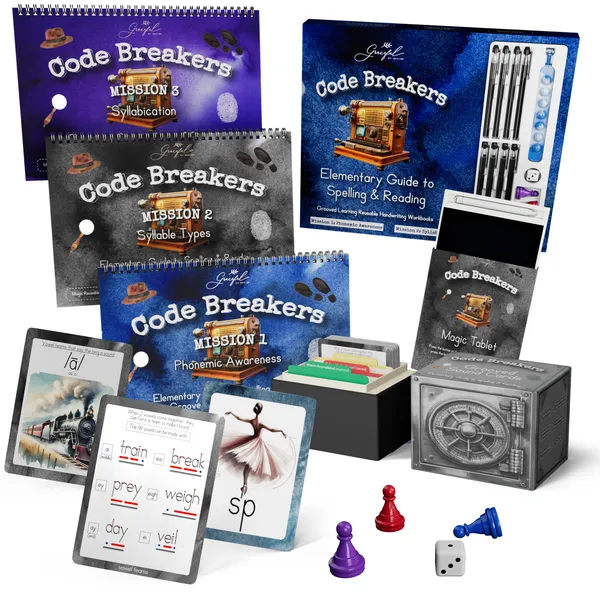
Explore Grooved Learning's Code Breakers Complete Bundle for tactile sound cards and reusable literacy practice.
To teach blends and digraphs, first model the sound, then ask the child to say it, trace it, read it in a word, and spell it. In a blend, each consonant keeps its sound. In a digraph, two letters work together to make one sound.
Begin by helping your learner hear the difference. Then follow a short, repeatable routine that connects listening, speaking, tracing, reading, and spelling.
What is the difference between blends and digraphs?
Blends are groups of two or more letters where you hear each sound, like the "st" in stop. Digraphs are two letters that work together to make one unique sound, like "th" in thin. Helping kids hear these differences is a key part of how to teach blends and digraphs to young readers.
Check out Grooved Learning's structured literacy approach to help your child master these key skills.
Defining blends and digraphs
A blend happens when two or more consonant letters stay next to each other in a word. You can still hear each letter's sound clearly. For example, in the word "flag," you hear the "f" and the "l" as they slide together. Children need to learn to blend these sounds without losing one of the letters along the way.
A digraph is different because two letters join to make a brand new sound. In the word "chat," the "c" and "h" do not make their own sounds. They work as a team to form the "ch" sound instead. Common digraphs include "sh," "th," and "ck." Learning these pairs helps students see that some letter groups act as a single unit.
| Feature | Consonant Blend | Consonant Digraph |
|---|---|---|
| Sounds heard | Each letter makes its own sound | Two letters make one new sound |
| Example words | Blue, frog, step, glass | Ship, thin, chop, song |
| Goal for students | Slide sounds together | Spot the letter team |
| Key challenge | Hearing the middle sound | Remembering the new sound |
Why the distinction matters for reading
If a child treats a digraph like a blend, they will try to say each letter's sound. This makes it very hard to read words like "ship" or "whale." They might try to say "s" and "h" apart, which does not result in the correct word. This mix-up can slow down their reading speed and lead to upset at home or in school.
Research shows that systematic phonics instruction helps children learn these letter-sound links. When a child can tell these two apart, they can decode new words with more ease. This skill also helps with spelling.
A child who knows that "th" makes one sound is more likely to write both letters when spelling the word "this."
How to teach blends and digraphs
The best way to teach blends and digraphs is to follow a clear and simple path. Start with one group at a time so the child does not get mixed up. You might teach blends first since they use sounds the child already knows. Once they are steady, you can move on to teaching digraphs as "letter teams."
Using multi-sensory practice helps kids remember these sounds better. Grooved Learning's tools use sight, sound, and touch to help the brain map letters to their sounds. For example, having a child trace the letters while saying the sound can boost their memory. This type of active learning keeps kids engaged and makes the lesson feel like play instead of work.
You can also use tools like sound cards to show how letters come together. Seeing the letters on one card can help a child view a digraph as one unit. For blends, using separate cards that slide together shows how the sounds stay the same but move closer. These simple steps make the process of how to teach blends and digraphs much more helpful for every learner.
How to teach blends and digraphs step by step
Teaching blends and digraphs requires a planned approach. Start by showing the letters and saying the sounds. Use a multi-sensory method where children see, hear, say, and trace the letter shapes. This active work builds strong memory paths. Then, guide them to blend these sounds together into words using structured, explicit routines.
- Model the target sound or sound sequence clearly.
- Ask the child to repeat it while looking at the letters.
- Have the child trace the letters while saying the sound.
- Blend the pattern into a word, then read the whole word.
- Ask the child to spell the word from sound to print.
One sound at a time
To know how to teach blends and digraphs, you must start with the basics. First, show your student the letters that make up the sound. Tell them clearly what sound those letters make. For a digraph like 'sh,' you show two letters but make one sound. For a blend like 'st,' each letter keeps its own sound. This explicit teaching of letter-sound links is a core part of phonics programs for young kids. Grooved Learning's reading and spelling curriculum uses this direct method to help beginners build a strong base.
You can use cards to make this easy. Hold up a card and say the sound out loud. Have the child say the sound back to you. This helps their brain connect what they see with what they hear. Learning to read is a hard task for new learners. They must learn to recognize words while also knowing the meaning of the text. By focusing on one sound at a time, you keep them from feeling stuck. This simple start paves the way for harder skills later on.
Multi sensory tools for touch
Using more than one sense at a time helps kids learn better. Multi-sensory tools engage sight, sound, touch, and movement. This structured approach is very helpful for students who find reading tough. Grooved Learning's multi-sensory sound cards allow kids to feel the letter shapes as they learn. When a child traces a letter with their finger while saying the sound, they use their muscles to help their memory. This touch-based learning makes the lesson more fun and helps the sound stick.
These tasks also help remove barriers to learning. Some children need more than just a book or a screen to get the hang of new sounds. Movement and touch provide other ways for them to learn. You might have them trace the letters in sand or on a grooved surface. The goal is to make the sound and the shape feel real to them. This hands-on work builds the path in their brain. It turns a boring task into a game that gets results.
Blending routines for words
Once the child knows the sounds, they need to put them together. This is the "blending" part of how to teach blends and digraphs. A clear way to teach phonics uses a set plan to show new parts and then practice them. You can use Grooved Learning's multi-sensory practice tools to guide this step. Start with short words that use the new blend or digraph. Have the child say each sound slowly, then slide them together to read the whole word. This step-by-step path helps them read smoothly over time.
Following a clear routine makes this simple for parents and teachers. You can use this six-step process to teach any new blend or digraph in your lessons.
- Show the sound card or letter group clearly to the child.
- Say the sound out loud and ask the child to repeat it three times.
- Have the child trace the letters with their finger while they say the sound.
- Write the new sound on a board and add other letters to make a word.
- Point to each letter and say the sounds, then blend them to read the word.
- Ask the child to write the word and say the sound as they move their pen.
Doing this every day helps kids feel sure of themselves. They stop guessing and start reading with skill. This method works well for all types of learners. It makes sure no child falls behind as the words get longer. With a bit of time and the right tools, your student will be reading blends and digraphs with ease.
Which blends and digraphs should you teach first?
To teach blends and digraphs well, start with common digraphs like sh, ch, and th after your child knows short vowel sounds. These two-letter teams act as single units of sound. Once those are firm, introduce letter blends, starting with s-blends and l-blends, to help students build fluency with more complex words.
Code Breakers Reading Program: Grooved Reusable Workbooks
Starting with common digraphs
Many teachers find it best to teach digraphs first. A digraph is a pair of letters that makes one new sound. For example, the letters "s" and "h" come together to say /sh/. Because the two letters act as one unit, they are often easier for a new reader to spot than a blend. You should focus on the most common teams first, such as sh, ch, th, and wh. This step helps a child read many new words quickly.
Using a learn-to-read programs ensures that you introduce these sounds in a way that makes sense. Grooved Learning's Code Breakers books use a multi-sensory path to help kids feel and see how these letters work. This method helps the brain map the new sounds to the letters well. When a child can spot a digraph in a word like "shop" or "thin," they are ready for more complex letter groups.
Moving to letter blends
Once your child is sure with digraphs, you can move to letter blends. In a blend, you can still hear each letter's sound. In the word "stop," you hear both the /s/ and the /t/. It is helpful to start with "s-blends" like st, sp, and sl, or "l-blends" like bl and fl. These are often easier for kids to hear and say than "r-blends" or blends that come at the end of a word.
A planned phonics teaching approach is key here. This means you teach the sounds in a clear order that builds on what the child already knows. You do not want to overwhelm them with too many new groups at once. Instead, teach a few blends and let them practice with simple words before adding more. This slow and steady path builds the skills they need for longer books.
Basics for success
Before you start teaching these new groups, make sure your child is firm on their basic letter sounds. They should be able to read short vowel words like "cat" and "run" with ease. This strong base is a big part of the Science of Reading. If a child struggles with single sounds, adding blends and digraphs too soon can lead to stress and slow progress.
You can also work on sound skills without using any letters. Ask your child to tell you the sounds they hear in a word like "flag." If they can hear the /f/ and /l/ as separate sounds. They will have a much easier time when they see the letters "fl" on a page. Taking the time to build these skills first makes the rest of the learning journey much smoother for everyone.
What multi-sensory activities make sound patterns stick?
Knowing how to teach blends and digraphs well means using more than just books. Using sight, sound, and touch helps young kids build strong memory for new phonics. Grooved Learning's complete Code Breakers literacy bundle uses these ways to make sure every child can learn these tricky groups of letters.
Use physical sound cards
Start with a clear look at the letters using real tools. Grooved Learning's multi-sensory sound cards let kids see and touch the patterns they learn. This active way is a core part of Orton-Gillingham methods. These methods help kids who have hard times with reading words. You can have your child tap each letter as they say the sound to build a fast link in their mind.
For blends like "st" or "fl," ask the child to slide a finger under both cards as they blend the sounds. For digraphs like "sh" or "th," use one card that shows both letters. This small change helps them see that the two letters now make just one new sound. Using these cards each day builds the speed they need to read full words without stops.
Try tracing and movement
Adding movement can make a big change in how a child learns a sound. You can have your child trace the letters of a blend in a tray of sand or salt as they say the sound. This multi-sensory practice links the feel of the letters to the sound they hear. It is a quick way to make sure the lesson is both fun and helpful for small hands.
You can also use big body moves to teach these patterns. Ask your child to jump for each sound they hear in a word with a blend. If the word is "clap," they would jump for /k/, /l/, /a/, and /p/. For a digraph word like "ship," they only jump three times for /sh/, /i/, and /p/. This helps them feel the count of sounds in each word they try to spell.
Build and blend words
Word building is a key part of systematic phonics instruction. It helps kids see how letters work together. Give your child a set of letter tiles and ask them to build words with a blend or digraph. Start with easy words and slowly add harder ones as they get better. This hands-on work turns a hard task into a clear path they can see.
Using Grooved Learning's workbooks gives your child a place to write and erase as they practice. Writing the letters while saying the sounds helps fix the patterns in their memory. This type of practice follows the Science of Reading, which focuses on building skills in a step-by-step way. With daily work, these sound patterns will soon become a natural part of their reading.
Make the routine easier to repeat with Grooved Learning's Code Breakers Grooved Reusable Sound Cards.
What common mistakes should you correct?
Many students struggle with blends and digraphs when they first start reading. Common errors include dropping sounds in a blend or mixing up digraph sounds like "sh" and "ch." Using Grooved Learning's multi-sensory tools and clear help prompts helps students get past these hurdles. Fixing these mistakes early builds a strong base for reading and spelling success.
Fixing sound drops in blends
Children often skip the second sound in a blend. For example, they might say "sing" instead of "sling." This happens because they do not yet hear the clear sounds. You can fix this by using sound boxes or Elkonin boxes. These tools help children see how many sounds are in a word. Have the child move a chip for each sound they hear. If they miss one, ask them to say the word again very slowly. This helps them find the "hidden" sound. Using a reading program to teach phonics helps build these skills in a clear way.
Handling digraph confusion
Digraphs like "sh," "th," and "ch" are hard because they do not sound like their own letters. A common mistake is trying to blend the two letters together. A child might say "s-h" for "sh." To fix this, teach digraphs as a single unit. Use multi-sensory sound cards that show the letters together. If a child makes a mistake, tell them the letters are a "team" that makes one sound. Research from the NICHD shows that clear teaching of these links is vital for new readers. You can also use body cues. For "th," have them notice where their tongue is.
Ending the guessing game
Many students guess words instead of reading them. They might look at a picture of a tree and say "tree" when the word is "trunk." This habit slows down their growth. To stop guessing, cover any pictures while they read. Ask them to touch each letter and say its sound. This forces them to look at the whole word. Avoid prompting the child to use an illustration as a clue. Instead, say "look at the letters." This change helps them learn the true code of reading.
Avoiding too much practice
Parents often want to teach many blends and digraphs at once. This can lead to a lot of stress for the child. It is better to teach one or two at a time. Make sure the child knows them well before you move on. Short, daily sessions are better than one long hour of work. Grooved Learning's tools are made for these quick, focused bursts. Keeping the work fun and short helps the brain remember more.
How do you know when a child is ready to move on?
Knowing when a child is ready for the next step requires checking if they can read and spell words with blends and digraphs without help. Mastery is more than just a right answer. It is the ability to use these skills in many ways. A child should show they can decode new words and spell them correctly in short lessons to show they are truly ready for the next level.
Check reading and spelling transfer
A key sign of mastery is the child's ability to transfer what they learn from reading to spelling. Reading is the act of turning letters into sounds. Spelling is the act of turning sounds back into letters. When you teach phonics, a child should be able to read a word like "brush" and then spell it on their own later. This two-way skill shows they have a deep grasp of how letters work together to form sounds.
You should also look for "transfer to text." This is when the child can read these patterns in a book, not just on a card. If a child can read blends in a story, they are likely ready for a new set of sounds. Systematic phonics instruction shows that children must use these sound patterns to read and spell words well. Monitoring this transfer helps ensure the child builds a strong base for future reading.
Aim for high accuracy and speed
Accuracy is the first step, but speed is what leads to fluency. A child should be able to read and spell words with multi-sensory practice at about 90% accuracy before you move to a new topic. If they still trip over the sounds "sh" or "cl," they likely need more time to practice. Speed matters because it shows the child is no longer working hard to sound out each part of the word.
When a child can recognize a word quickly, their brain can focus on what the word means. They do not have to just focus on the sounds. This is a core part of the Science of Reading. This method focuses on building phonemic awareness and fluency. Research shows that structured reading programs help students at risk for learning gaps. They do this by providing clear paths to mastery. Use short checks to see if the child can recall the sounds fast and with ease.
Use brief review sessions
Even after a child seems to have mastered a skill, they still need quick reviews to keep it fresh. Brief review sessions at the start of a lesson help move the information into long-term memory. You can use Grooved Learning's sound cards or workbooks to do a three-minute check on past blends and digraphs. This keeps the child confident. It also ensures they do not forget what they have already learned.
If a child starts to struggle with an old skill, it is a sign you may need to slow down. It is better to spend an extra day on review than to move forward on a weak base. Small, daily reviews lead to big wins in reading and spelling over time. This slow and steady path ensures that every new skill is built on a foundation that is rock solid.
Frequently Asked Questions
What is the difference between a blend and a digraph?
A consonant blend involves two or more letters where you can still hear each single sound. For example, in the word "blast," you hear both the "b" and the "l." In contrast, a digraph uses two letters to make one new, unique sound. Common digraphs like "sh" or "ch" do not let you hear the separate sounds of each letter. Knowing these differences helps children decode new words correctly during early reading lessons.
What multi-sensory activities work best for teaching blends and digraphs?
Effective multi-sensory tasks use sight, sound, touch, and movement to help kids learn. You can have students trace letters in sand or use play dough to form shapes. Moving the body while saying sounds also helps. According to Grooved Learning, using these different senses can boost memory and keep students alert. These tools turn letter patterns into physical tasks. This makes it easier for young learners to remember and build literacy skills.
Are Elkonin boxes useful for teaching blends and digraphs?
Yes, Elkonin boxes are very helpful for showing kids how to break words into parts. For a digraph, students place one chip in a single box because it makes one sound. For a blend, they use two separate boxes since each letter keeps its own sound. This visual tool supports phonemic awareness, which is a key part of the Science of Reading. Using boxes makes it clear how sounds work together to form the words children see on the page every day.
How can I help students distinguish between blends and digraphs?
You can help students by using clear and direct lessons. Show them that blends are like friends holding hands while digraphs are two letters that combine to make one new sound. Use color-coded cards or tiles to show the difference. One tile can represent a digraph sound, while two tiles show a blend. This structured approach is a main part of the Orton-Gillingham method, which helps many children who find reading and spelling hard.
Help your child master blends and digraphs today
Waiting to address reading gaps often leads to more stress for young learners as they move into harder books. It can make reading success feel much longer and harder to reach. When you start using Grooved Learning's multi-sensory practice tools now, you give your child a big win on smooth reading while ensuring they do not fall behind or lose their love for books. By starting this work today, you build a strong base that will help them learn for years to come instead of struggling with phonics for another week. You can stop the frustration that comes with mixed sounds and help your child feel proud of their reading skills starting right now.
Ready to contact Grooved Learning? Contact Grooved Learning to explore the Code Breakers reading program and help your child find success with phonics.

Written by
Jenna ColemanJenna Coleman is the founder of Grooved Learning, a former classroom teacher, M.Ed., and mom of three based in Pennsylvania. She creates hands-on, multi-sensory educational tools grounded in the Science of Reading. Every article is written from real classroom and parenting experience.
Learn more about Jenna →


