


Handwriting and Reading Connection: Why It Matters
Understanding the handwriting and reading connection
Handwriting is not merely a neatness exercise. When a child forms a letter, the brain coordinates movement, vision, attention, and language. That active process can reinforce letter recognition and support the sound-symbol knowledge used in reading and spelling. The benefit is strongest when handwriting complements, rather than replaces, systematic reading instruction.
Explore Grooved Learning's reusable early learning workbooks for guided, low-pressure practice.
This guide explains what research suggests, where claims should remain cautious, and how parents and educators can connect handwriting with meaningful literacy practice at home or in the classroom.
How handwriting and reading support each other
Writing and reading are distinct but connected skills. Forming letters gives children motor and visual information about each symbol, while reading practice teaches them to recognize symbols in words and connect print with speech. Used together, these experiences can strengthen letter knowledge, spelling, and early decoding.
Reading requires children to identify printed symbols efficiently and connect them with sounds and meaning. Handwriting asks them to produce those symbols through a planned sequence of movements. Because both activities involve close attention to letter forms, practice in one area can support learning in the other.
The connection is not evidence that handwriting alone teaches a child to read. Children still need explicit instruction in phonemic awareness, phonics, vocabulary, fluency, and comprehension. A useful overview of this broader approach is Grooved Learning's guide to what structured literacy really means.
Why forming a letter can improve recognition
To write a letter, a child must notice its lines, curves, orientation, and stroke order. This focused analysis creates a richer learning experience than simply glancing at the letter. Research summarized by the Iowa Reading Research Center indicates that handwriting instruction can benefit letter recognition and early reading outcomes.
Handwriting may be particularly helpful when children confuse similar forms such as "b" and "d." The movement pattern for each letter provides another clue, alongside its visual appearance and sound. Parents looking for a gentle starting point can use these free letter recognition worksheets as part of a varied routine.
A connected skill, not a cure-all
Evidence supports teaching handwriting, but claims should stay measured. Motor practice can make letters more familiar and writing more automatic; it cannot replace direct teaching about how speech sounds map to print. If a child has persistent difficulty with reading, writing, or fine motor control, an educator or qualified clinician can help identify the appropriate support.
Why movement, vision, and sound matter
Effective early literacy practice brings together what a child sees, hears, and does. As children form a letter, say its sound, and find it in a word, they build several routes for recalling it. This multisensory approach is useful when it stays accurate, purposeful, and appropriately paced.
Writing by hand recruits motor planning and visual attention. Saying a letter's sound while forming it adds auditory and speech information. These channels do not operate as separate tricks; they work together to help the child build a precise representation of the letter.
Build the letter-sound link deliberately
Ask the child to say the letter sound during formation, then find the same letter in a simple, decodable word. This sequence keeps the activity tied to reading rather than turning it into isolated penmanship. For families comparing teaching approaches, Grooved Learning's guide to choosing a reading and spelling curriculum explains what to look for.
Accuracy matters more than speed at first. Model the sound clearly, avoid adding an extra vowel sound, and use words that match the phonics pattern the child is learning. As recall becomes more secure, gradually reduce prompts.
Use tracing as a bridge to independent formation
Tracing can reduce the motor demands of a new letter and help a child experience its path. It works best as a temporary scaffold. After several guided attempts, invite the child to copy the letter beside the model and then form it from memory. Grooved Learning's overview of pre-writing and tracing worksheets offers additional progression ideas.
Grooved Learning's recessed paths and disappearing ink make repeated practice approachable. The goal is not endless repetition. It is a gradual move from supported movement to accurate, confident, independent writing.
Fine motor foundations for easier handwriting
Comfortable handwriting depends on posture, hand strength, coordination, and control as well as letter knowledge. Playful fine motor activities can prepare children to handle tools without fatigue. Short practice sessions, suitable materials, and a relaxed grip help children focus on learning letters instead of struggling with the physical task.
A child who is still developing hand control may understand a letter but find it difficult to produce. That does not necessarily indicate a reading problem. Separating motor demands from literacy knowledge helps adults choose a useful response instead of simply asking for more writing.
Strengthen control through play
Activities such as shaping dough, using tongs, threading beads, building with small blocks, and drawing large paths can develop coordination. These fine motor activities for preschoolers give families practical options that do not feel like drills.
During writing, check that the child's feet and forearms are supported and that the tool is comfortable to hold. A tense grip, pain, or rapid fatigue is a reason to pause and adjust. More effort does not always produce better learning.
Move from guided strokes to fluent writing
Automatic letter formation frees attention for spelling, sentence construction, and meaning. Build that fluency gradually: practice a small set of related strokes, form a few letters accurately, use those letters in words, and revisit them later. The progression should remain purposeful and brief.
Make repeat practice easier with Grooved Learning's disappearing-ink early learning workbooks.
Five practical ways to connect handwriting and reading
Parents and educators can connect handwriting with reading in brief daily activities. Have children form a letter, say its sound, build and read a word, write something meaningful, and review the result aloud. Each activity should match the child's current phonics knowledge and end before concentration or comfort declines.
- Form, say, and find. Ask the child to form one target letter, say its sound, and find it in a book or printed word. This links movement to real print.
- Build and write a decodable word. Use letter tiles to build a word that follows a known phonics pattern. Read it together, then have the child write it.
- Write a meaningful label. Label a drawing, a family photo, or an object in the room. Meaning gives handwriting a purpose beyond copying.
- Read back the writing. After the child writes a word or sentence, ask them to point and read it aloud. Offer support without turning every error into a correction session.
- Review with spaced practice. Revisit letters and patterns after a day and again later in the week. Distributed practice is generally more useful than one long session.
Keep sessions short and responsive
Five to ten focused minutes may be enough for a young child. Stop before frustration becomes the main experience. Praise specific effort, such as noticing the starting point or correcting a stroke, rather than praising neatness alone. Grooved Learning's stress-free handwriting guide includes more ways to protect confidence while building skill.
Choose practice that matches the learner
A preschooler may benefit from curves, lines, name letters, and playful sound practice. An elementary learner may need targeted work on formation, spacing, spelling patterns, or written fluency. For a broader comparison of literacy options, review these learn-to-read program considerations.
What integrated literacy practice looks like
Integrated practice links letter formation directly to sounds, words, spelling, and reading. Instead of copying rows of disconnected letters, a child learns a letter's movement, says its sound, uses it in a word, and reads that word. This sequence makes handwriting support literacy while keeping each teaching goal clear.
| Practice type | What the child does | Literacy purpose |
|---|---|---|
| Isolated copying | Copies letters without using sounds or words | Builds some motor control |
| Integrated practice | Forms a letter, says its sound, writes a word, and reads it | Connects handwriting, phonics, spelling, and reading |
Isolated copying can improve control, but it may not deepen a child's understanding of print. A stronger activity connects the written form with spoken language and meaningful use. For example, a child can form "m," say /m/, build "map," write it, and then read a short sentence containing the word.
Balance explicit instruction with meaningful use
Children benefit from clear modeling: where a letter begins, how it moves, and which sound it represents. They also need chances to use the skill in names, labels, messages, spelling, and reading. Grooved Learning's name-writing worksheet ideas show how familiar words can make formation practice more relevant.
Not every writing activity needs to test reading, and not every reading activity needs a pencil. Integration is effective when it strengthens the lesson rather than adding unnecessary demands. Adults can alternate focused handwriting, explicit phonics, oral language, and enjoyable shared reading across the week.
Know when to seek extra support
Development varies, and occasional reversals or uneven writing can be typical for beginners. Consider speaking with the child's teacher, pediatrician, occupational therapist, or reading specialist if writing is consistently painful, progress remains limited despite instruction, or reading and spelling difficulties persist. Early, specific support is more useful than simply increasing practice time.
Frequently asked questions
Handwriting can support early reading when it is paired with phonics, meaningful words, and suitable motor practice. The answers below clarify common questions about fluency, tracing, typing, and starting age. They also explain where handwriting helps and why it remains one part of a complete literacy approach.
Does the handwriting and reading connection help with reading speed?
Handwriting practice can support reading fluency by making letter recognition and letter-sound recall more automatic. It is not a shortcut to faster reading, however. Children also need explicit phonics instruction, practice decoding words, and time reading connected text.
Why is tracing better than just looking at letters?
Tracing adds movement and touch to visual learning. Following a letter's strokes can help a child notice its orientation, sequence, and distinctive features. Tracing is most useful when the child also names the letter, says its sound, and later forms it without a guide.
Does typing on a screen help reading as much as writing by hand?
Typing can help children compose and communicate, but it does not provide the same letter-by-letter formation experience as handwriting. For early letter learning, forming letters by hand gives children useful motor and visual information. Both skills can have a place as children grow.
When should kids start writing practice?
Children can begin playful pre-writing activities in the preschool years when they show interest and can comfortably handle drawing tools. Start with short, low-pressure sessions involving lines, curves, shapes, and familiar letters. Adjust expectations to the child's development and ask an educator or clinician about persistent difficulty.
Build literacy through purposeful practice
The most useful handwriting practice is accurate, brief, connected to reading, and appropriate for the child. Pair letter formation with sounds and meaningful words, while continuing explicit phonics and rich reading experiences. Grooved Learning gives families reusable tools that can make this balanced practice easier to repeat without adding pressure.
Handwriting offers children a physical route into the world of print. When adults connect that movement with sounds, words, spelling, and reading, practice becomes more than penmanship. It becomes one evidence-aware part of a complete literacy routine.
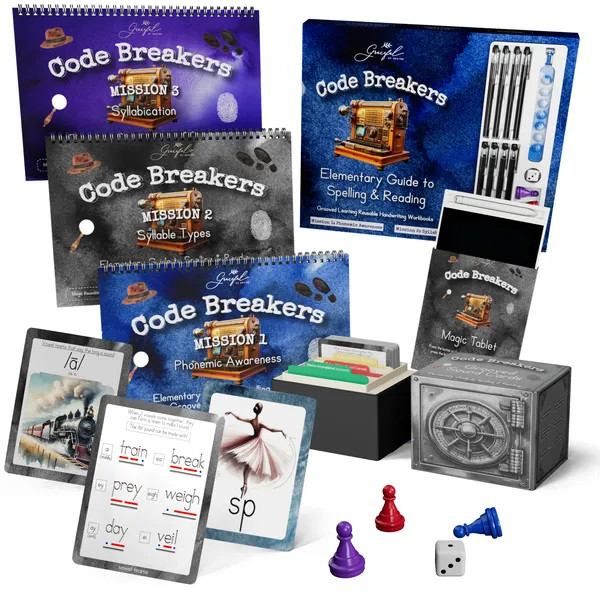
Start with a manageable goal, observe how the child responds, and adjust the level of support. Families can browse Grooved Learning's collection of grooved learning books or explore Code Breakers structured literacy activities for additional practice options.

Written by
Jenna ColemanJenna Coleman is the founder of Grooved Learning, a former classroom teacher, M.Ed., and mom of three based in Pennsylvania. She creates hands-on, multi-sensory educational tools grounded in the Science of Reading. Every article is written from real classroom and parenting experience.
Learn more about Jenna →


